Event 1
NKL Laboratories hiring freeze

The [NKL Laboratories hiring freeze](entity:event-recall-event-nkl-laboratories-hiring-3779301fcd54) is the economic reversal that redirects [Ryanna Owens](entity:character-recall-character-ryanna-owens-6da1df986c4d)’s life at the opening of the story. After graduating with exceptional academic credentials and believing that a promising chemical-engineering position awaited her, Ryanna learns that the offer will not proceed because [NKL Laboratories](entity:organization-recall-organization-nkl-laboratories-bcf752ce39d1)’s earnings have fallen and its stock price has plunged. The cancellation strips certainty from her immediate future and creates the financial pressure through which [Andrew Rutledge](entity:character-recall-character-andrew-rutledge-fa3770688c94)’s extraordinary proposal gains its force.
## Causes and Background
The freeze follows two quarters of lower-than-expected earnings. Ryanna explains to [Natalie](entity:character-recall-character-natalie-bcb3c4a4ef9f) that the resulting fall in NKL Laboratories’s stock price has led the company to institute a hiring freeze and suspend all current job offers. The decision is not presented as a judgment on Ryanna’s qualifications: NKL Laboratories had pursued her through expensive dinners and visits to several offices, suggesting that the company had been strongly interested in hiring her before its financial position changed.
Ryanna’s credentials make the reversal especially bitter. She graduated [Phi Beta Kappa](entity:organization-recall-organization-phi-beta-kappa-9cd515f6d896), placed in the top three percent of her graduating class, and received the chemical engineering department’s “Most Distinguished Student” award. She had therefore understood the offer as recognition of an unusually strong academic record. The hiring freeze forces her to confront the difference between individual merit and a company’s broader financial vulnerability: even a candidate NKL Laboratories had actively courted cannot overcome a corporate decision driven by earnings and stock-market pressure.
## Immediate Effects on Ryanna Owens
The suspended offer leaves Ryanna searching for alternative employment. She initially understands the interruption as potentially temporary, but the recruiter makes clear that the freeze may last for months or even more than a year and advises her to line up something else. Ryanna carefully distinguishes the offer as “Suspended, not rescinded,” yet the practical consequence remains the same: the position she had accepted is unavailable, and her expected professional beginning has disappeared.
The setback also shapes how Andrew Rutledge assesses her circumstances. During their later conversation, Andrew reveals that he has had a report prepared on Ryanna and knows that the job she accepted has been suspended while she looks for other work. His knowledge turns a private disappointment into part of the information surrounding his proposal. The employment crisis is thus not merely background characterization; it is the condition Andrew identifies when presenting an arrangement that could immediately transform Ryanna’s financial prospects.
## Connection to Andrew Rutledge’s Proposal
The hiring freeze makes Andrew’s offer appear in a radically different economic scale. Ryanna had believed that the salary attached to the NKL Laboratories position placed her comfortably above ordinary financial insecurity, perhaps in the ten- or fifteen-percent range rather than among the richest one percent. Andrew’s proposed payment of three million dollars makes that anticipated salary seem only a small fraction of the amount available to her.
Andrew offers one million dollars upon signing an agreement committing Ryanna to attempt conception for at least twelve months, another million after conception and confirmation of the pregnancy, and the final million after the child is born. The structure of the offer matters because it converts her uncertain employment future into a sequence of immediate and conditional payments. Ryanna remains seated in Andrew’s office, stunned by the contrast between the lost NKL Laboratories salary and the money now placed before her. Her financial vulnerability does not erase her moral hesitation, but it helps explain why she does not simply leave.
## Consequences and Later Reassessment
The employment setback continues to color Ryanna’s judgment after she enters Andrew’s arrangement. When she later takes a pregnancy test during a crisis at the [Rutledge estate mansion](entity:object-recall-object-rutledge-estate-mansio-96e5ce735bbd), she no longer wants a positive result. She hopes instead for a negative result because pregnancy would preserve a tie to Andrew and place his company’s board in a difficult position. Her change in attitude shows how far the meaning of the original financial opportunity has shifted: what once seemed like an escape from insecurity has become entangled with emotional pain, public exposure, and Andrew’s corporate danger.
Ryanna also thinks about the money she has already received, including a new car and nearly eighty thousand dollars spent on other expenses. She intends to return most of the payment if she is not pregnant and refuses to accept the identity of a “gold-digging whore,” even though the hiring freeze helped make Andrew’s proposal materially attractive. At the [Jaymore Inn & Suites](entity:location-recall-location-jaymore-inn-suites-3974ccd08357), she limits her expenses because she is using part of Andrew’s first million and wants to reduce the amount she will have to repay. The freeze therefore remains connected not only to the beginning of the arrangement but also to her ongoing concern with financial responsibility and moral self-definition.
## Narrative Significance
The NKL Laboratories hiring freeze functions as a catalyst rather than a final destination. It interrupts Ryanna’s merit-based professional future and opens the path toward a contractual relationship that initially appears to solve her economic problem. Yet the solution carries consequences that a normal job offer would not: secrecy, dependence on staged payments, conflict with Andrew’s corporate interests, and uncertainty about whether their relationship is contractual or emotional.
The event also establishes a recurring conflict between work, money, and private life. NKL Laboratories’s corporate instability pushes Ryanna toward Andrew, while later pressures at [Rutledge Electronics](entity:organization-recall-organization-rutledge-electro-f50191ada9fc) keep Andrew away from home and contribute to strain in their marriage. In that larger pattern, a business decision made for financial reasons becomes the first link in a chain connecting corporate power to intimate obligation. Ryanna’s eventual emotional reconciliation with Andrew does not erase the hiring freeze; instead, the abandoned job remains the practical origin of the choices that bring them together and force them to negotiate love, family, and economic power.
Event 2
Ryanna saves Andrew from traffic

Ryanna saves [Andrew Rutledge](entity:character-recall-character-andrew-rutledge-fa3770688c94) from traffic when she notices the distracted businessman walking toward an oncoming bike messenger near [Rittenhouse Square](entity:location-recall-location-rittenhouse-square-3563685111c2). The rescue is both a literal reversal from imminent death to safety and the story’s initiating encounter: an act of spontaneous courage brings together two strangers whose relationship will move from a charged meeting to a contractual childbearing arrangement, love, marriage, parenthood, and a shared family future.
## Causes and Background
The event occurs on a sunny, cloudless late-spring day, but Ryanna is not enjoying the weather. Her mood remains burdened by the collapse of what she believed was a solid chemical-engineering offer from [NKL Laboratories](entity:organization-recall-organization-nkl-laboratories-bcf752ce39d1). The company’s weaker-than-expected earnings had caused its stock price to plunge, leading to a hiring freeze and the suspension of all current offers. She is walking through Rittenhouse Square with her best friend, [Natalie](entity:character-recall-character-natalie-bcb3c4a4ef9f), while facing financial uncertainty and the loss of an anticipated professional beginning.
The setting places Ryanna at a crossroads before she consciously knows it. She is preoccupied with employment and student loans, while Andrew is absorbed in business: he is reading an email from a Hong Kong contact about a supplier threatening to delay shipment unless [Rutledge Electronics](entity:organization-recall-organization-rutledge-electro-f50191ada9fc) accepts an additional three percent tariff. Their concerns are sharply different, but both are already being directed by economic pressures. The danger arises because Andrew’s attention is fixed on commerce rather than his immediate surroundings.
## What Happens
Andrew stands out in the crowd because he is about a head taller than the people around him and has the polished appearance of someone suited to the runways of Paris rather than the streets of [Philadelphia](entity:location-recall-location-0c859ef79004)’s Center City. His charcoal gray suit signals wealth, while his phone and business email reveal the demands of his position. Ryanna is ordinarily more attracted to men with caramel-toned or darker skin, yet Andrew catches her attention because he is about to walk directly into traffic.
Ryanna reacts before deliberation can intervene. She shouts, “Watch out!” and grabs Andrew’s upper arm, pulling him back onto the sidewalk just as an oncoming bike messenger threatens to hit him. The rescue requires surprising physical effort: Andrew’s expensive suit conceals a heavily muscled arm, and he has at least eight inches and fifty pounds on Ryanna. Panic and adrenaline nevertheless allow her to overpower him briefly enough to remove him from danger.
Her intervention is effective but forceful. Andrew trips and falls onto the sidewalk, and his phone shatters beside him. He looks up with furious green eyes and demands, “What the fuck?” The arrival of a city bus, with its whizzing screech and hiss, interrupts the confrontation. Although the bus is not the vehicle that endangered him, its presence helps Andrew grasp how serious the moment has been. The immediate value shift is absolute: a distracted, well-dressed executive moves from the edge of bodily harm to embarrassment, anger, and reluctant recognition of his rescuer.
Once the danger has passed, Andrew admits that he had not realized how close he was to the street because he was reading the supplier’s email. He then recognizes that Ryanna has saved his life, accepts her hand as she helps him stand, and smiles while asking her name. Ryanna identifies herself as [Ryanna Owens](entity:character-recall-character-ryanna-owens-6da1df986c4d) and refuses to treat the rescue as a debt, telling him only to be more careful after replacing his phone. Their exchange keeps the incident grounded in ordinary practicality: the broken phone is a materially visible consequence, but both acknowledge that it is preferable to a broken body.
## Immediate Consequences and Later Significance
The rescue changes the direction of Ryanna’s day and of the larger narrative. Before Andrew appears, Ryanna is defined by professional disappointment and the stalled promise of employment. Afterward, she has met the man who will offer her three million dollars to carry his child. The event therefore connects her economic vulnerability to the later childbearing proposal without reducing her action to financial calculation: she saves Andrew before she knows his identity, wealth, or offer.
The encounter also establishes a pattern that continues through their relationship. Ryanna acts decisively when Andrew is endangered, while Andrew initially responds through authority, irritation, and business-minded distraction. Their first interaction contains both attraction and friction: she notices his striking body and expensive clothing, but the first physical contact between them is a rescue that leaves him on the pavement with a destroyed phone. The beginning is therefore not a polished romantic introduction but a collision between courage, vulnerability, pride, and circumstance.
## Development into a Relationship
The traffic rescue becomes the first link in a chain of increasingly consequential decisions. Ryanna’s professional setback and uncertainty about her future make Andrew’s later proposal materially powerful, especially because he offers three million dollars for forty weeks of pregnancy. She hesitates because she had not expected to become a mother until at least her thirties and understands that pregnancy is a major responsibility. Andrew assures her that the greater responsibility will be his after the child is born, while acknowledging the physical demands she will endure during the forty-week pregnancy.
The arrangement eventually develops beyond its contractual basis. Ryanna discovers that she is pregnant, later tells Andrew the news, and the pair confront the fact that they are becoming parents. During their conflict and reconciliation, Andrew insists that they must not shut each other out, particularly now that they will share parental responsibility. He connects this fear to his childhood experience of his divorced parents’ silent treatment, revealing that the rescue’s initial physical urgency will develop into a relationship shaped by questions of communication, trust, and family stability.
Andrew’s feelings ultimately supersede the business logic that first surrounds their connection. When he proposes, he acknowledges that an earlier proposal had been framed around the interests of Rutledge Electronics and its board rather than his true feelings. He then tells Ryanna that he loves her, kneels before her, and gives her a small black velvet box containing a perfect pear-shaped diamond ring. Ryanna accepts, declaring that she loves him as well. The sidewalk incident thus gains retrospective significance as the moment when the woman who physically saves Andrew begins the relationship through which they will save, challenge, and remake one another.
## Family and Thematic Significance
The event introduces the central tension between personal agency and economic circumstance. Ryanna’s unemployment follows the [NKL Laboratories hiring freeze](entity:event-recall-event-nkl-laboratories-hiring-3779301fcd54), while Andrew’s danger results from the pressures of managing suppliers and tariffs. Their first meeting occurs where those pressures become bodily and immediate: the executive’s commercial preoccupation nearly costs him his life, and the unemployed engineer’s alertness places her in control. The reversal gives Ryanna authority before Andrew’s wealth can define the terms of their relationship.
That reversal remains important as their family expands. Ryanna later prioritizes the baby and Andrew while still preserving her ambition to return to graduate school and pursue chemical engineering. Andrew supports that goal, insisting that the bright, independent, career-focused woman he met should not disappear because they are having a child. After their first child, AJ, work and parenting strain their marriage; Ryanna fears becoming a single mother in all but name, while Andrew recognizes his absence and works to spend more time at home. They reconnect through deliberate effort and face a second pregnancy with confidence that they can withstand the growing pains of family life.
As an event, the rescue is therefore small in scale but foundational in structure. A woman walking under the weight of a failed job offer sees a powerful stranger fail to see danger. She pulls him back, breaks his phone, receives his name, and begins a relationship whose decisive stakes will later include pregnancy, marriage, parenthood, career, and the preservation of intimacy. The gesture’s importance lies not only in preventing Andrew’s death but in establishing Ryanna as the person who notices what he misses and acts before authority, wealth, or deliberation can protect him.
Event 3
Three-million-dollar childbearing agreement

The [Three-million-dollar childbearing agreement](entity:event-recall-event-three-million-dollar-ch-2b23027245e9) is the founding bargain between [Andrew Rutledge](entity:character-recall-character-andrew-rutledge-fa3770688c94) and [Ryanna Owens](entity:character-recall-character-ryanna-owens-6da1df986c4d): Andrew seeks a child without first finding a wife, while Ryanna, newly deprived of an expected job and looking for work, is offered three million dollars to become the child’s mother. Its decisive significance lies in the way it converts reproduction into a negotiated contract and then allows that contract to expand beyond money. The arrangement establishes the obligations, anxieties, and unequal bargaining power that later shape Andrew and Ryanna’s romance, parenthood, public crisis, and marriage.
## Causes and Background
Andrew’s proposal grows out of a personal desire that has survived a series of failed relationships. He tells Ryanna that several women have entered and left his life, but none became his wife, while his wish to start a family remains as strong as ever. The revelation unsettles Ryanna because it initially seems unrelated to their meeting, until Andrew explains that a report on her background has shown him that an accepted job offer was suspended and that she is seeking other employment.
Ryanna’s correction—that the offer was “Suspended, not rescinded”—shows how closely she guards the facts of her professional setback, even while the distinction does not change her immediate need for work. Andrew then makes clear that his offer is personal rather than connected with [Rutledge Electronics](entity:organization-recall-organization-rutledge-electro-f50191ada9fc). He identifies her intelligence and clean record as qualities he wants in the mother of his child, presenting her selection as a considered judgment rather than a casual proposition. The scene therefore joins two forms of assessment: Andrew’s private search for a parent and Ryanna’s exposure as a financially vulnerable young professional.
Andrew’s position as the CEO of a publicly traded company supplies the agreement’s secrecy requirement. He fears that disclosure would create a scandal and give hostile board members the ammunition needed to force him out. Although fertility clinics are expected to maintain confidentiality, he does not trust institutional privacy to protect a high-profile executive. He consequently insists that the child be conceived organically, without a clinic or test tubes. The natural-conception rule makes the arrangement more intimate and more physically consequential than an ordinary financial transaction, placing Ryanna’s body and Andrew’s reputation inside the same confidential bargain.
## Terms and Negotiation
Ryanna is preparing to leave when Andrew stops her with the payment figure: three million dollars. The sum is divided into three installments. She is to receive one million dollars when she signs an agreement committing to attempts to conceive for at least twelve months, a second million after conception and medical confirmation of pregnancy, and the final million after the child’s birth. The staged payments link money to successive bodily and contractual milestones, while also giving Andrew continuing leverage beyond the initial signature.
The offer changes Ryanna’s sense of scale. The starting salary attached to her suspended [NKL Laboratories](entity:organization-recall-organization-nkl-laboratories-bcf752ce39d1) position had seemed enormous only weeks earlier, but Andrew’s proposed sum makes it appear minor. The first installment alone could erase her student loans, and a sound investment of the full payment might free her from needing to work. Yet financial independence is not her only concern. She loves chemical engineering and hopes to find work in that field, so the agreement confronts her with a conflict between economic security, professional identity, and the demands of pregnancy and motherhood.
Ryanna also questions the arrangement’s parental terms. She asks whether she will be able to see the child after birth and whether the child will know her as its mother. Andrew promises that she may participate as much or as little as she chooses, but insists that whatever level of involvement she selects must remain consistent. His demand comes from his own experience of a father who was present only sporadically; he wants to prevent that instability from being repeated in his child’s life. Ryanna responds with the example of her divorced parents: although her mother had custody, she saw her father regularly and believes a child can turn out well without being raised in a continuously intact household.
The negotiation becomes a mutual test of trust. Ryanna worries that Andrew might later hire a nanny and cast her aside, while Andrew worries that she might take the first million dollars and disappear. He tells her that the arrangement requires both of them to believe the other will act properly toward her and the child. Ryanna acknowledges that she needs the money but says that the child will be Andrew’s and that she would not take the baby away from him, especially knowing how deeply he wants a family. Their handshake turns a startling proposal into a deal, even as Ryanna wonders what she has committed herself to.
## Immediate Execution and Social Stakes
The agreement moves rapidly from an informal handshake to a formal legal arrangement. Within a week, Ryanna meets Andrew’s lawyers, signs the contracts, and receives the first million-dollar payment. The speed of the transition emphasizes the contrast between the emotional uncertainty of her decision and the efficiency of the legal and financial machinery surrounding it. The money is no longer hypothetical; it is in her bank account, giving the contract an immediate material reality while leaving the pregnancy, the future child, and the relationship unresolved.
The bargain also becomes a source of pressure within Ryanna’s friendship with [Natalie](entity:character-recall-character-natalie-bcb3c4a4ef9f). After Ryanna moves away, she continues paying half the rent so Natalie will not be left without support when a replacement roommate’s plans collapse. Natalie later displays Gucci, Ralph Lauren, Tiffany, and Manolo Blahnik purchases despite being financially strained and working as a bank trainee. Ryanna discovers two checks from [The Philadelphia Ledger](entity:organization-recall-organization-the-philadelphia-6ef5f4e997b4)—one for thirty-five hundred dollars and another for eighty-five hundred—and finds a month of calls and texts between Natalie and the tabloid. The payments reveal that Natalie has sold the secret of the three-million-dollar arrangement, turning Ryanna’s confidential reproductive labor into a source of personal profit.
Natalie’s betrayal exposes the limits of the secrecy Andrew considered essential. The agreement was designed to shield Andrew, Ryanna, and Rutledge Electronics from public scrutiny, but its very secrecy creates valuable information for anyone able to sell it. Natalie’s designer goods become visible traces of the betrayal, while the checks provide the concrete financial link between the tabloid and the disclosure. The private contract thus enters the public sphere not through a clinic, as Andrew feared, but through a friend’s exploitation of confidential knowledge.
## From Contract to Family
The agreement does not remain a purely economic exchange. Andrew and Ryanna begin to treat the unborn child as a shared parental responsibility, and Andrew later tells her that they are going to be parents when they discuss the need to stop shutting each other out. Their disagreement over whether to take space or immediately resolve conflict is filtered through memories of their respective families: Ryanna values a temporary pause to prevent destructive words, while Andrew remembers the poisonous silence that preceded his parents’ divorce. The child becomes a reason to establish a new pattern of communication rather than repeat old family wounds.
[Pregnancy](entity:time-recall-time-pregnancy-f62a235b4fb4) makes the contract physically irreversible and gives its payment structure a concrete endpoint. Ryanna reaches her fortieth week, but the baby turns breech a few weeks before the due date and does not return to the proper position. Although she had planned a natural birth, the obstetrician schedules a C-section. The change demonstrates that the agreement can specify money, duration, and parental participation but cannot control the bodily realities of pregnancy and delivery. Ryanna bears the medical risk that makes the final installment possible, while Andrew can offer reassurance but cannot remove the experience from her body.
The contract’s legal logic is eventually challenged by emotional commitment. After Natalie’s exposure and the threat of further public scrutiny, Andrew proposes marriage as a way to protect their privacy, Rutledge Electronics, and his standing with the board. He describes the public image of a couple who have merely mixed up the customary order of love, marriage, and the baby carriage. Ryanna rejects that first proposal because Andrew frames it as a solution for reputation and corporate stability rather than an honest declaration of love. Later, in front of her mother and aunt, he admits that she was right to refuse and acknowledges that he had failed to express how much he loved her and how unwilling he was to live without her. The distinction changes marriage from an instrument for insulating the agreement into a possible emotional commitment.
## Consequences and Significance
When Ryanna tells her family that she is seven weeks pregnant, her mother and Aileen initially laugh because the three-million-dollar arrangement sounds impossible. Ryanna then explains that Andrew Rutledge paid one million dollars when the contracts were signed, will pay another after medical confirmation, and will pay the last million when the child is born. Her disclosure forces the family to confront the agreement as a real transaction rather than an outrageous joke. Her mother’s rapid questions about the father, marriage, the pregnancy, and Ryanna’s ability to manage show how the contract destabilizes ordinary assumptions about sex, family formation, and maternal responsibility.
The family also resists the idea that money alone defines Ryanna’s position. Aileen warns Andrew that Ryanna’s mother and aunt will protect Ryanna and the baby from being taken advantage of. Ryanna objects because nothing in their interactions has shown that Andrew is exploiting her or neglecting the child’s interests, while her mother agrees that Aileen’s concern is justified in principle. The confrontation places the agreement inside a wider system of family oversight: Andrew may have corporate authority and legal resources, but Ryanna’s relatives claim a separate authority grounded in care and protection.
The agreement’s deepest tension is that its formal terms promise clarity while its lived consequences generate uncertainty. It defines payment, conception, pregnancy confirmation, birth, secrecy, and ongoing parental participation, yet it cannot settle whether Ryanna is a surrogate, a mother, a partner, or all three. It cannot determine whether Andrew’s protection is paternal care, corporate risk management, or love. Nor can it prevent a friend from monetizing the secret or guarantee that a contractual relationship will remain emotionally contained.
By the time Andrew and Ryanna move toward marriage, the three-million-dollar bargain has become the origin story of a family rather than its complete explanation. Its economic terms remain important: Ryanna’s financial crisis makes the offer possible, and Andrew’s wealth gives him the power to propose it. But the arrangement also creates obligations that money cannot finish paying—the obligation to remain present, to recognize both parents, to protect the child from instability, and to transform distrust into sustained partnership. The event therefore functions as both transaction and threshold: it begins with a handshake over installments and develops into the contested foundation of Andrew and Ryanna’s shared life.
Event 4
Ryanna moves into Andrew's estate

Ryanna moves into [Andrew Rutledge's estate](entity:location-recall-location-andrew-rutledge-2881150697de) as the first major practical consequence of their conception agreement. What begins as a response to her failed chemical-engineering job offer becomes a relocation into Andrew's secluded world, where contractual expectations, personal privacy, sexual intimacy, and the possibility of family life are forced into the same domestic space.
## Causes and Background
The move follows a sharp reversal in Ryanna's circumstances. After receiving what seemed to be a solid offer from [NKL Laboratories](entity:organization-recall-organization-nkl-laboratories-bcf752ce39d1), she learns that the company's disappointing earnings have caused its stock price to plunge, leading to a hiring freeze and the suspension of current offers. Her professional future suddenly becomes uncertain just as Andrew offers three million dollars for her to conceive, carry, and bear his child.
Andrew's proposal is not a conventional employment arrangement. He wants to start a family despite not having found a woman he wishes to marry, and he identifies Ryanna as the ideal mother for his child because of her intelligence and clean record. The agreement promises one million dollars at signing, another million after conception and medical confirmation of pregnancy, and the final million after the child's birth. Andrew also insists that conception occur naturally rather than through a fertility clinic, because the secrecy of the arrangement is essential to protecting his position as the CEO of a publicly traded company and shielding himself from board members who would use a scandal to force him out.
Ryanna accepts the arrangement cautiously. She is attracted to Andrew, but she is not certain that she is ready to become a mother; she had imagined postponing motherhood until at least her thirties. Her consent depends on remaining present in the child's life and being acknowledged as the mother. Andrew promises that the child will know both of them as parents, while also assuring her that she will not be surrendering all of her independence.
## What Happens
The agreement advances rapidly. Within a week of their handshake, Ryanna meets Andrew's lawyers, signs the contracts, and receives the first million-dollar installment. Her initial plan is to move into her own apartment, but mentioning the need for a second bedroom and a nursery changes the conversation. Andrew proposes that she stay at his estate outside the city so they can become better acquainted while attempting to conceive and continue living together during the pregnancy.
The proposal immediately raises a question of autonomy. Ryanna does not want to give up too much independence, and [Natalie](entity:character-recall-character-natalie-bcb3c4a4ef9f) interprets the arrangement as a possible attempt by Andrew to control her. Andrew responds by emphasizing the scale and layout of the property: the main house is more than twenty thousand square feet, and Ryanna will have her own space while he respects her privacy. Rather than accept immediately, Ryanna asks to inspect the estate before deciding, preserving at least a formal measure of choice in a relationship shaped by Andrew's wealth and legal resources.
Natalie drives Ryanna from [Philadelphia](entity:location-recall-location-0c859ef79004) to the property. Although the estate lies only about ten minutes outside the city, its long, winding, tree-lined road and isolation make it feel like another world. A security guard stops them at a small white wooden shack trimmed in green, takes their identification, and disappears inside before allowing them to continue. The controlled entrance makes the estate's separation from ordinary urban life visible and gives concrete form to Natalie's concern that Ryanna may be entering a carefully managed environment.
The mansion changes the emotional temperature of the visit. A gorgeous three-story Georgian house comes into view, and Andrew comes outside before the car has fully stopped. He greets Ryanna with a bear hug, tucks a strand of hair behind her ear, and tells her that he is glad she has arrived. The embrace temporarily quiets her doubts, and she realizes that being with him gives her an inexplicable sense that everything will be all right. The relocation therefore becomes more than a housing decision: it is the moment when a negotiated arrangement begins to feel like a shared life.
## Domestic Arrangement and Relationship Development
Andrew's estate is designed to accommodate both intimacy and distance. Its immense size allows Ryanna to retain a private area while living under the same roof as the man who has hired her to bear his child. That arrangement reflects the contradiction at the center of their relationship. Andrew needs closeness for conception, familiarity, and eventual co-parenting, yet the contract requires boundaries that prevent the situation from becoming an openly acknowledged romance.
Ryanna's arrival also places Natalie outside the new household. Natalie had initially encouraged acceptance, calling three million dollars for one pregnancy too valuable to refuse, but the isolated estate makes her less enthusiastic. She questions why Ryanna cannot remain in the city and warns that Andrew may be trying to control her. Ryanna explains that cohabitation is intended to help the couple get to know each other and bond before the baby is born. The exchange establishes the estate as both an opportunity and a pressure point: it offers security and emotional proximity while narrowing Ryanna's distance from Andrew's authority.
Andrew's welcome nevertheless carries genuine emotional force. He remembers little about the earlier day when Ryanna saved him from danger except Ryanna herself and the fact that she saved his life. His immediate warmth at the estate suggests that the connection predates the formal agreement, even though the move makes that connection harder to separate from money, secrecy, and reproductive obligation.
## Consequences and Later Significance
The move initiates the domestic phase of the conception arrangement and places Ryanna inside the environment where the central conflicts will develop. Her career disappointment has brought her to Andrew, but the estate gives her access to the wealth and security represented by the agreement while also confronting her with the loss of ordinary independence. The relocation thus converts an abstract contract into daily proximity, where promises about privacy, parenthood, and mutual knowledge can be tested.
The shared household becomes the foundation for later changes in their relationship. Ryanna eventually discovers that she is pregnant and tells Andrew, and the pregnancy makes the promised parental partnership an immediate reality rather than a future condition of payment. Andrew later proposes marriage, ultimately declaring that his love for Ryanna—not [Rutledge Electronics](entity:organization-recall-organization-rutledge-electro-f50191ada9fc) or its board—is the reason he wants her as his wife. His proposal reframes the estate's original logic: what began as a controlled arrangement to produce a child develops into a relationship he describes as indispensable to his life.
The relocation also foreshadows the continuing negotiation between motherhood and work. During her pregnancy, Ryanna withdraws from a chemical-engineering opportunity, yet she tells Andrew that she hopes eventually to return to graduate school and pursue her dream of working as a chemical engineer. Andrew supports that ambition and says he does not want the bright, independent, career-focused woman he first met to disappear because they are having a baby. The estate therefore becomes a testing ground for whether domestic security will erase Ryanna's professional identity or allow it to survive alongside motherhood.
## Narrative Significance
[Ryanna moves into Andrew's estate](entity:event-recall-event-ryanna-moves-into-andre-e6a7fdfc3027) at the boundary between transaction and family formation. The event gives physical shape to the three-million-dollar conception agreement, but it also exposes the arrangement's unstable mixture of consent, economic pressure, emotional attraction, and unequal power. Ryanna makes a choice rather than being physically compelled, yet the choice is made after the loss of her NKL Laboratories offer and in the presence of a financial sum large enough to eclipse her expected salary and erase her student loans.
The estate's guarded entrance and immense mansion symbolize Andrew's protected public life, while Ryanna's private room represents the independence he promises to preserve. Their first embrace at the doorway briefly overcomes that division. In this contrast, the move becomes a decisive narrative threshold: Ryanna enters Andrew's controlled world as a paid prospective mother, but she also enters the emotional space in which conception, pregnancy, parenthood, and eventually love can alter the meaning of the original contract.
Event 5
Ryanna and Andrew begin trying to conceive

[Ryanna and Andrew begin trying to conceive](entity:event-recall-event-ryanna-and-andrew-begin-f56065e49498) at the point where a highly structured financial arrangement becomes an intimate act shared by two people already drawn to each other. The event is decisive because it converts Andrew’s proposal to pay Ryanna three million dollars for bearing his child from an abstract bargain into a bodily and emotional reality, while leaving open the question of whether their relationship is still contractual, already romantic, or becoming both at once.
## Causes and Background
Andrew’s proposal arises after Ryanna’s expected position as a chemical engineer at [NKL Laboratories](entity:organization-recall-organization-nkl-laboratories-bcf752ce39d1) collapses when the company institutes a hiring freeze and suspends its offers. He presents fatherhood as a personal objective separate from his role at [Rutledge Electronics](entity:organization-recall-organization-rutledge-electro-f50191ada9fc): he wants to start a family but has not found the woman he wants to marry, and he believes Ryanna’s intelligence and clean record make her an ideal mother for his child. His offer promises three million dollars in installments: one million upon signing an agreement to attempt conception for at least twelve months, another after conception and medical confirmation of pregnancy, and the final million after the child’s birth.
The arrangement is shaped by Andrew’s public position and the threat of exposure. As CEO of a publicly traded company, he fears that disclosure would create a scandal and give hostile board members grounds to force him out. For that reason, he rejects fertility-clinic procedures and insists that the child be conceived organically, without a clinic or test tubes. The first attempt therefore carries several stakes at once: the fulfillment of a contractual timetable, the protection of Andrew’s corporate reputation, the possibility of financial independence for Ryanna, and the creation of a child whose parents must remain involved in the child’s life.
Ryanna does not accept without questioning the terms. She worries about whether she will be allowed to see the child after birth and whether the child will know her as its mother. Her own experience informs that concern: although her parents divorced when she was seven and her mother retained custody, she continued seeing her father regularly and regards that arrangement as evidence that a child can be well cared for outside a two-parent home. Andrew promises that their child will know both of them as parents. Even so, Ryanna admits that she had not expected to become a mother until at least her thirties and is unsure whether she is ready for the responsibility. The money would erase her student loans and free her from waiting for NKL Laboratories to lift its hiring freeze, but she also loves chemical engineering and does not want a life of leisure to replace her professional identity.
## From Agreement to Intimacy
The attempt begins after Andrew and Ryanna’s attraction has become difficult to separate from their negotiations. Andrew’s first kiss interrupts Ryanna’s light protest about the arrangements for her rooms. The kiss is unexpected but welcome; he draws her closer as though afraid she might leave, while she responds by wrapping her arms around his neck. Andrew acknowledges that he has moved quickly and insists that he does not want to push or rush her or make her feel coerced. Ryanna makes clear that her desire is active rather than merely purchased: she tells him, through her response and reassurance, that she is pushing back as much as he is moving toward her.
That distinction remains central to the scene. Andrew’s wealth and the promised payment create an obvious imbalance, and the agreement gives the encounter a practical purpose, but the narrative repeatedly emphasizes mutual participation. Andrew stops when he realizes he has become carried away, and Ryanna reassures him that she is not being pressured. Their physical closeness consequently shifts the value of the arrangement. What began as a transaction governed by installments and confidentiality becomes an encounter in which contractual intention and personal desire operate simultaneously.
The progression toward conception is not mechanically efficient. Andrew first attends to Ryanna’s pleasure, and the couple’s intimacy includes acts that cannot themselves result in pregnancy. Ryanna recognizes this even while surrendering to the sensations of the moment. The contrast matters: the event is nominally organized around reproduction, yet its immediate experience is governed by affection, anticipation, and sexual pleasure rather than by clinical procedure or detached scheduling. The first conception attempt therefore establishes the relationship’s defining tension, in which the body is both the subject of a bargain and the medium through which emotional attachment develops.
## The Conception Attempt and Its Immediate Turn
The encounter eventually moves from extended foreplay to intercourse, but its emotional meaning has already been established by the couple’s negotiations over consent, parenthood, and mutual desire. Ryanna and Andrew have not approached conception as a detached medical task; they have spent the night discovering how readily the contractual arrangement can become intimate. When Andrew reaches orgasm inside Ryanna, the physical act finally fulfills the agreement’s central purpose, and the possibility of pregnancy becomes immediate rather than hypothetical. The event’s bodily intensity also reinforces the reciprocity that has defined the scene: both experience pleasure, both remain present afterward, and neither treats the other as a disposable participant in a paid transaction.
## Hope, Uncertainty, and the Continuing Contract
The immediate aftermath turns intercourse into an uncertain promise rather than a confirmed result. After their breathing slows, Ryanna voices the hope that conception may already have occurred. Andrew answers with encouragement but not certainty: if pregnancy has not happened this time, he says, they will continue trying. His response preserves the agreement’s twelve-month duration while also recasting repetition as something they can share rather than merely perform for payment. Ryanna settles more deeply into his arms, hoping that their child has already been conceived and looking forward to further attempts if necessary. The event therefore ends on a deliberately provisional note. It fulfills the first practical movement toward the child promised by the contract, but its emotional consequence is larger: Andrew and Ryanna leave the encounter joined by anticipation, mutual pleasure, and an emerging sense that the future they are pursuing may belong to both of them, not only to the terms of their agreement.
Event 6
Paparazzi exposure of the baby agreement

The paparazzi exposure of the baby agreement is the turning point at which [Ryanna Owens and Andrew Rutledge](entity:relation-recall-relation-ryanna-owens-and-and-e55a14d6473b)’s carefully concealed arrangement becomes vulnerable to public discovery. What had been negotiated as a private exchange—three million dollars for Ryanna to conceive, carry, and bear Andrew’s child—suddenly appears as a scandal that can be photographed, named, moralized, and used against both of them. The confrontation threatens Ryanna’s dignity and Andrew’s corporate authority at the same moment, transforming a reproductive contract into a crisis of publicity, trust, and power.
## Causes and Background
The exposure grows out of the unusual structure of Andrew’s proposal. He wants a child despite not having found a woman he wishes to marry, and he identifies Ryanna as a suitable mother because of her intelligence and clean record. The agreement promises three million dollars in installments: one million when the contract is signed and Ryanna commits to trying to conceive for at least twelve months, another after conception and medical confirmation of pregnancy, and the final million after the child is born.
Andrew insists that conception occur naturally rather than through a fertility clinic. As the CEO of a publicly traded company, he fears that even supposedly confidential medical procedures could become known, and he believes that opponents on the [Rutledge Electronics](entity:organization-recall-organization-rutledge-electro-f50191ada9fc) board would exploit the arrangement to force him from office. The agreement therefore depends on secrecy from its beginning. Its confidentiality is not merely a personal preference; it is a defensive measure within a corporate struggle in which a private reproductive decision could be recast as evidence of poor judgment.
The arrangement also contains an apparent attempt to define parental responsibility in advance. Andrew promises that the child will know both parents and tells Ryanna that she may participate in the child’s life as much or as little as she chooses, provided her involvement remains consistent. That promise gives the contract an emotional and familial dimension, but it does not remove the underlying imbalance: Andrew supplies extraordinary financial resources and corporate protection, while Ryanna bears the bodily risks and public vulnerability of pregnancy. The later confrontation exposes how fragile those carefully negotiated boundaries are once outsiders gain access to the story.
## What Happens
The immediate incident begins after Ryanna enters a drugstore to buy additional pregnancy tests. She purchases two more three-packs and hides them among other items so that the tests will not attract attention. The effort fails to make the situation feel private: the cashier gives her a knowing look and wishes her good luck. Outside, as Ryanna unlocks her car, a man calls her by name and blinds her with a camera flash.
The stranger wears an ill-fitting dark suit, a wide striped tie, and horn-rimmed glasses, and carries the large camera associated with paparazzi. After identifying [Ryanna Owens](entity:character-recall-character-ryanna-owens-6da1df986c4d), he produces a tape recorder and asks whether she is [Andrew Rutledge](entity:character-recall-character-andrew-rutledge-fa3770688c94)’s surrogate. He then states the central allegation directly: Andrew is paying her three million dollars to have his baby. Ryanna denies it and tries to get into her car, but her shaken hands cause her to drop the keys while the photographer continues questioning her.
The reporter knows details that should have remained confined to the agreement. He asks whether the money will be paid in installments and whether Ryanna has already received one million dollars. He also demands to know how she met Andrew Rutledge, why she accepted the arrangement, and whether she fears being labeled a “gold-digging whore.” The phrase follows Ryanna even after she retrieves her keys, starts the car, and drives away. The event is therefore not only an attempted revelation of facts; it is an act of public degradation that imposes a hostile interpretation on her motives before any article has appeared.
Ryanna drives directly to the [Rutledge Electronics headquarters](entity:object-recall-object-rutledge-electronics-h-b047cc14a494) and calls Andrew on his direct line. [Colleen](entity:character-recall-character-colleen-7164b7244882) escorts her to his office, where Andrew’s initial impatience changes to worried concern when he learns that the photographer knew both her full name and the amount already paid. The specificity of the questions confirms that the threat is not random gossip. Someone with access to the arrangement has supplied information detailed enough to connect Ryanna, Andrew, the payment schedule, and the unborn child.
## Corporate Stakes and Personal Rupture
Andrew reacts as though the disclosure has struck him physically. He worries that the story will reach the press before he has secured the corporate position he needs. The planned acquisition of [Bullen Microsystems](entity:organization-recall-organization-bullen-microsyst-6ad6fc7c86ee) has taken months, and he says that only a few more months are needed before new board members can outvote the directors who oppose him. If the arrangement becomes public, he fears that Bohane and Stolliccio will use it as evidence of a lack of judgment, persuade other board members to remove him as CEO, and scuttle an acquisition he believes could make Rutledge Electronics the world’s number one technology company.
The contrast is stark. Ryanna has just been photographed while buying pregnancy tests and insulted as a supposedly mercenary woman; Andrew immediately calculates the effect on board votes, acquisition timing, and corporate control. His panic is understandable within the pressures he describes, but his response makes Ryanna feel displaced by the company whose interests helped create the secrecy in the first place. When Colleen arrives to announce Andrew’s meeting, he dismisses Ryanna and tells her to go home, postponing their discussion until later.
Ryanna answers by withdrawing from the arrangement. She says that she will return the money already paid and end the deal because she is not yet pregnant and therefore cannot expose Andrew’s board to the scandal he fears. Her decision changes the value of the agreement from financial security to emotional injury: the bargain that once promised freedom now feels like a source of humiliation and abandonment. She leaves the office despite Andrew’s calls, departs the Rutledge Electronics building, and holds herself together until she reaches the mansion and begins packing. Only then does the realization of breaking up with Andrew and leaving the estate release her tears.
The confrontation thus produces a double rupture. The paparazzo breaches the couple’s secrecy from outside, while Andrew’s preoccupation with corporate consequences breaches the emotional assurance on which Ryanna believed the arrangement rested. The event shows that the contract cannot fully protect either party: confidentiality may be written into an agreement, but public visibility, corporate opposition, and unequal control over the story can overwhelm its formal terms.
## Aftermath and Reframing
The exposure does not ultimately become the newspaper scandal Ryanna expects. Later, Andrew tells her that corporate security traced the problem to its source and that he used his connections with the corporation owning [The Philadelphia Ledger](entity:organization-recall-organization-the-philadelphia-6ef5f4e997b4) to have the stories killed before publication. Senior management, he explains, recognized that publishing false allegations and libeling an innocent woman could jeopardize hundreds of millions of dollars in business. The suppression prevents the arrangement from becoming a public article and shields Ryanna from the label the photographer tried to impose on her.
This outcome changes the meaning of the earlier crisis without erasing its damage. Andrew can deploy corporate relationships and financial leverage to control the press in a way Ryanna cannot, confirming the immense asymmetry between them. His intervention protects her reputation, but it also demonstrates that the same business power that made the arrangement dangerous is what allows him to contain its consequences. The scandal is not disproved through open public discussion; it is removed from circulation through private influence.
By the time Ryanna and Andrew marry, the original contract has been rendered obsolete. Andrew orders his attorneys to destroy every copy of it, arguing that their marriage vows will bind them sufficiently. Ryanna’s father learns that she is pregnant, but neither parent tells him that the arrangement originally brought the couple together. The concealed agreement therefore survives the exposure as a secret even after the threatened newspaper story has been suppressed. Its disappearance from legal files marks the transformation of a paid reproductive bargain into a marital and parental commitment, while the need to hide its origin shows that the past still carries reputational force.
## Narrative Significance
The paparazzi exposure is the story’s clearest collision between private intimacy and public power. The drugstore, the pregnancy tests, the camera flash, and the shouted insult turn ordinary objects and actions into evidence for an audience Ryanna never consented to address. Her reproductive choices are reframed as a purchasable service, while Andrew’s motives are placed under the judgment of shareholders and board members who may know nothing of the couple’s promises to one another.
The event also tests the difference between formal consent and substantive autonomy. Ryanna agreed to the three-million-dollar arrangement, understood its payment schedule, and secured Andrew’s promise that the child would know both parents. Yet the paparazzo’s questions reveal how little control she possesses over the social meaning of that consent once the arrangement becomes visible. Her body, finances, pregnancy tests, and relationship are suddenly treated as public material, and the insult attached to the disclosure attempts to replace her own account with a hostile stereotype.
At the same time, the exposure accelerates the movement from contract to emotional commitment. Andrew’s fear of losing the [Bullen Microsystems acquisition](entity:state-recall-state-bullen-microsystems-acq-9af11089641c) initially intensifies the distance between them, but the later suppression of the stories helps make reconciliation possible. The event remains a wound in the relationship because it reveals Andrew’s capacity to place corporate survival before Ryanna’s immediate emotional security. It also becomes a test that the couple must pass before the agreement can be abandoned, the pregnancy acknowledged within the family, and marriage presented as the binding foundation of their future.
Event 7
Ryanna and Andrew's first separation

[Ryanna and Andrew's first separation](entity:event-recall-event-ryanna-and-andrew-s-fir-468979fa8075) is the decisive rupture between a contractual childbearing arrangement and the emotional relationship growing inside it. It begins at [Rutledge Electronics](entity:organization-recall-organization-rutledge-electro-f50191ada9fc) when the threat of public exposure collides with Andrew’s responsibilities as CEO and Ryanna’s need for dignity. It ends not with a clean termination, but with an immediate, painful reunion that exposes how much both have come to depend on one another.
## Causes and Background
The separation develops from pressures that have been accumulating around the [Andrew–Ryanna conception agreement](entity:rule-recall-rule-andrew-ryanna-conception-4e62d54ceaec). Andrew originally insists that conception occur organically rather than through artificial insemination or in vitro treatment because disclosure could damage his standing as the CEO of a publicly traded company. He fears that the revelation would give hostile board members ammunition to remove him and undermine his plans for Rutledge Electronics, including the acquisition of [Bullen Microsystems](entity:organization-recall-organization-bullen-microsyst-6ad6fc7c86ee). His demand for secrecy therefore treats their private arrangement as a corporate liability as much as a personal matter.
That pressure becomes sharper because Andrew is already fighting for control of Rutledge Electronics. He wants to broaden the company beyond electronics, while much of the board prefers to preserve its existing focus. The acquisition of Bullen Microsystems has taken months and, in Andrew’s view, could make Rutledge Electronics the world’s leading technology company. At the moment of crisis, however, the threatened disclosure makes him fear that board members will cite the arrangement as evidence of poor judgment, vote him out as CEO, and scuttle the acquisition. His professional timetable—he believes that only a couple more months are needed before new board members can change the balance of power—makes the exposure feel catastrophically premature.
Ryanna experiences the same crisis differently. The incident that reaches Andrew’s office has already subjected her to the insult of being called a “gold-digging whore.” For Andrew, billions of dollars, corporate authority, and the [Bullen Microsystems acquisition](entity:state-recall-state-bullen-microsystems-acq-9af11089641c) are at stake. For Ryanna, her character and good name are at stake. The separation is caused not simply by the leak, but by the failure of the couple to recognize that these forms of risk are unequal in scale yet equally real to the person who bears them.
## The Break at Rutledge Electronics
Andrew’s distress erupts into a visible meltdown. He paces through his office, rants about the acquisition and the board, and becomes so absorbed in his own crisis that he initially cannot respond to Ryanna. [Colleen](entity:character-recall-character-colleen-7164b7244882), accustomed to his habit of thinking out loud under stress, delays his meeting with the CFO by presenting the interruption as a sudden overseas emergency call. Her calm reaction emphasizes the strange division between Andrew’s public authority and his private emotional volatility: the billionaire CEO is allowed to unravel because his staff understands the pattern and knows how to preserve the appearance of control.
Ryanna finally moves close enough to force Andrew to acknowledge her and tells him to stop because he is frightening her. He regains some control and apologizes for being upset that details of their arrangement have apparently leaked, but the apology does not bridge the distance between them. When Ryanna says that she is just as upset, Andrew answers that she cannot comprehend what is at stake because she is not the CEO of a billion-dollar company. His response converts corporate power into a measure of whose suffering counts, and its condescension makes the conflict personal.
Ryanna answers by drawing a sharp contrast between money and dignity. She has no billion-dollar deals, but she has a reputation and character that matter to her more than money. Andrew then dismisses those concerns, saying that no one knows or cares who she is and that her reputation will be fine. His command that she go home treats her as though she were an employee interrupting his schedule rather than the woman carrying their shared reproductive arrangement. The dismissal becomes the emotional turning point of the event.
Ryanna responds by ending the arrangement herself. Since she is not yet pregnant, she argues that Andrew has no reason to fear what the board will think and offers to return the money already paid to her. She says they can call off the entire agreement, turns on her heel, and ignores Andrew’s calls for her to come back. The choice is both practical and symbolic: she withdraws from the economic exchange precisely when he has made clear that he values the company’s crisis above her immediate humiliation.
## Leaving and the Immediate Cost
Ryanna manages to leave the Rutledge Electronics building without breaking down and drives back to the [Rutledge estate mansion](entity:object-recall-object-rutledge-estate-mansio-96e5ce735bbd). Only after reaching her suite and beginning to pack does the full consequence of her decision arrive. She is not merely quitting a deal; she is leaving the home into which she had moved and acknowledging that she has broken up with Andrew. The tears she has suppressed in public are released in private, where the corporate performance of composure no longer has to be maintained.
Andrew repeatedly calls from his private line, but Ryanna refuses to answer. Her anger centers on his apparent indifference to her feelings and on the fact that he could have stopped her before she left the building but did not. In her bitter interpretation, he remains with his true love, Rutledge Electronics. The packed suitcases and the unanswered calls make the separation concrete: the relationship’s shared domestic space is being dismantled even while Andrew is trying to reopen communication.
The separation also changes the meaning of the arrangement itself. What began as a three-million-dollar plan organized around secrecy, natural conception, and Andrew’s corporate need for a child now carries the emotional risks of a love relationship. Ryanna’s readiness to repay the money and walk away demonstrates that the contract cannot compel her to remain after Andrew has denied the value of her pain. Her departure is therefore an assertion of agency within a profoundly unequal exchange, even though it leaves her grieving the life she had begun to imagine with him.
## Reunion and Reassessment
The separation lasts only hours before Andrew finds Ryanna and the two agree that they need to talk. The encounter reverses the emotional direction of the office scene. When Andrew reaches out and tucks a strand of her hair behind her ear, Ryanna’s composure collapses. He takes her into his arms, holding her with one arm around her shoulders and the other around her waist as she sobs. The embrace gives physical form to the attachment that the contract had initially concealed: their pain is no longer merely a disagreement over terms or reputation.
Ryanna’s tears release the anger and tension generated by the reporter’s insult, while [Natalie](entity:character-recall-character-natalie-bcb3c4a4ef9f)’s betrayal, though still infuriating, temporarily recedes beside Andrew’s physical closeness. Andrew tells her that the day has been one of the most miserable of his life and that being unable to reach her was torture. Ryanna explains that she was angry because he trivialized the insult and frightened her during his office meltdown. She can understand his reaction more fully after having her own private meltdown, but understanding does not erase the injury; the reunion begins because both partners acknowledge the emotional cost of the separation.
Andrew also reassures Ryanna that the arrangement’s details remain confined to the two of them and that his staff knows how seriously he guards his personal life. This information eases her fear of exposure, although it does not eliminate the underlying imbalance between his concern for Rutledge Electronics and her concern for personal dignity. The reconciliation therefore rests on more than secrecy. It requires Andrew to recognize that protecting the company cannot mean treating Ryanna’s humiliation as insignificant.
## Consequences for the Relationship
The first separation becomes an early test of whether Andrew and Ryanna can move beyond a transactional model of intimacy. Andrew is accustomed to power, control, and the management of risk; the crisis shows him that love cannot be secured through corporate authority or contractual structure. Later, when he explains why he asks Ryanna to marry him again, he admits that loving her leaves him vulnerable and outside his usual control. He decides that he must expose his feelings because otherwise he will lose her, acknowledging that he has never felt strongly enough about another woman to make such a surrender.
The event also foreshadows the recurring conflict between Andrew’s leadership of Rutledge Electronics and his family responsibilities. Even after the couple resumes their relationship, Andrew’s work on the microsystems acquisition keeps him at the office and leaves them living as polite strangers who share meals without much intimacy. The company crisis is not a one-time obstacle; it is the structure that repeatedly competes with the household. The first separation teaches both of them that reconciliation requires more than physical return.
That lesson becomes crucial after their marriage and the birth of their first child. During a later marital crisis, Ryanna tells Andrew that his absence makes her feel like a single mother in all but name. He admits that she is right about his failure to spend enough time at home, and the couple deliberately changes their behavior: Andrew comes home earlier, while Ryanna sets aside distractions such as her iPad to focus on him. Their closeness is rebuilt gradually, showing that the first separation is an initial version of a larger pattern—distance created by work and hurt, followed by repair through recognition and shared effort.
## Narrative Significance
As an event, Ryanna and Andrew's first separation shifts the story’s central value from contractual security toward mutual recognition. Before the rupture, secrecy and corporate survival dominate the arrangement. At the office, Andrew’s cold insistence that Ryanna cannot understand his stakes exposes the arrangement’s hierarchy; at the mansion, her departure exposes the limits of that hierarchy. The scene’s decisive reversal occurs when the person who appears economically dependent refuses to remain emotionally subordinate.
The separation is narrated through Ryanna’s first-person perspective, so the reader experiences the break through her humiliation, anger, suppressed tears, and later relief rather than through an impartial account of Andrew’s corporate predicament. That perspective preserves the contrast between Andrew’s self-description as a man protecting a billion-dollar company and Ryanna’s embodied experience of being insulted, dismissed, and forced to defend her own worth. The brief duration of the separation does not make it trivial. Its function is to reveal that both characters have crossed a boundary: the baby arrangement may have begun as a business transaction, but losing the other has become personally unbearable.
Event 8
Ryanna discovers her pregnancy

[Ryanna discovers her pregnancy](entity:event-recall-event-ryanna-discovers-her-pr-bba533fc5a9d) in a guest bathroom at the [Rutledge estate mansion](entity:object-recall-object-rutledge-estate-mansio-96e5ce735bbd) immediately after breaking up with [Andrew Rutledge](entity:character-recall-character-andrew-rutledge-fa3770688c94) and preparing to leave his household. The positive [Pregnancy test](entity:object-recall-object-pregnancy-test-2dbfc9a8700c) reverses the meaning of the entire childbearing arrangement: what had once been a hoped-for contractual outcome arrives when Ryanna feels emotionally abandoned, wishes to sever her ties to Andrew, and fears the consequences for both their relationship and [Rutledge Electronics](entity:organization-recall-organization-rutledge-electro-f50191ada9fc).
## Causes and Background
Ryanna’s discovery follows a period in which several pressures have converged. Her anticipated chemical-engineering position at [NKL Laboratories](entity:organization-recall-organization-nkl-laboratories-bcf752ce39d1) has collapsed because disappointing earnings caused the company’s stock price to plunge, leading to the [NKL Laboratories hiring freeze](entity:event-recall-event-nkl-laboratories-hiring-3779301fcd54) and the cancellation of current job offers. Financial insecurity therefore helped make Andrew’s offer of three million dollars for forty weeks of pregnancy appear life-changing. The money could erase her student loans after the first installment and seemed capable of freeing her from the immediate need to find work.
The arrangement was never emotionally simple for Ryanna. She had not expected to become a mother until at least her thirties and openly acknowledged that having a baby was a responsibility for which she might not be ready. Andrew assured her that he would carry most of the responsibility after the birth, while recognizing that pregnancy itself would require her to bear substantial physical demands. At the time of the test, however, Ryanna’s understanding of the arrangement has changed. She has fallen in love with Andrew, believes he may have been falling in love with her, and has just concluded that he treats Rutledge Electronics as his true priority and dismisses her feelings.
## The Discovery
While packing the clothes and possessions she had brought to the Rutledge estate mansion, Ryanna notices the drugstore bag containing the Pregnancy test. She has already left Andrew’s office and is preparing to drive back into the city to stay with [Natalie](entity:character-recall-character-natalie-bcb3c4a4ef9f), but the discovery makes waiting impossible. Rather than return upstairs, she uses the guest bathroom near the mansion’s front entrance, a transitional space that mirrors her uncertain position between Andrew’s household and the life she intends to resume.
The procedure is familiar because Ryanna has taken the test many times before. She does not need to read the instructions; she urinates on the stick and waits for the result. The emotional direction has changed, though. Earlier tests had been accompanied by hope for a plus sign. This time she desperately wants the minus sign. She imagines that a negative result would release both of them: Andrew would avoid trouble with his board of directors, Rutledge Electronics would not be threatened, and she could return the money he had paid her and restore their lives to what they had been before the arrangement.
The result turns that imagined escape into impossibility. After seven minutes, the plus sign is still visible. Ryanna is pregnant. Her reaction is physical before it is analytical: her stomach knots, her heart pounds, and she slumps to the floor. She recognizes the contradiction at the center of the moment. The pregnancy should have been one of the happiest events of her life because it fulfills the goal for which she and Andrew entered the arrangement, and because the child is conceived with a man she has come to love. Yet the discovery feels like the beginning of a nightmare because the relationship surrounding the pregnancy has just fractured.
## Immediate Consequences
The positive Pregnancy test changes Ryanna’s choices from private decisions into parental decisions. She realizes that she is no longer choosing only for herself and that Andrew and she will remain connected for many years, regardless of whether their romance survives. The test therefore transforms the contractual promise into an enduring family relationship before either character has fully resolved the conflict between them.
Ryanna also reassesses the money. She has already bought a new car and paid off student loans, and she knows she cannot immediately return the entire million dollars she has received. She nevertheless plans to repay most of it and find a way to replace the almost eighty thousand dollars she has spent. Her insistence on repayment reflects her fear of being reduced to the insult of a “gold-digging whore,” a label associated with the public controversy around the arrangement. The pregnancy thus intensifies not only emotional dependence but also her concern for dignity, financial accountability, and the difference between accepting compensation and exploiting Andrew’s wealth.
The discovery is initially private, but it soon becomes a disclosure that alters the couple’s direction. When [Andrew and Ryanna reconcile](entity:event-recall-event-andrew-and-ryanna-recon-e7eee264d42c), she tells him directly that she is pregnant. Andrew is thunderstruck, and the news makes the stakes of their communication explicit: he says that he does not want them to shut each other out again, especially because they are going to be parents. Their conflict over silence and emotional withdrawal is consequently reframed as a problem that affects an approaching family rather than only two lovers.
## Family, Marriage, and Public Stakes
Ryanna’s pregnancy brings Andrew into her family circle and exposes the fragility of the boundaries around the arrangement. When her pregnancy is announced to her mother and [Aileen Howard](entity:character-recall-character-aileen-howard-41ca2f33d1ec), her mother responds with a rapid series of questions about how far along she is, the father, the relationship, marriage, whether she will continue the pregnancy, and how she will manage at twenty-one. Ryanna confirms that she is seven weeks along. The scene makes pregnancy a matter not only of personal feeling but also of family judgment, protection, and practical responsibility.
The same disclosure forces Andrew to explain the failed marriage proposal. He admits that he had asked Ryanna to marry him, but that she was right to reject the proposal because he had presented marriage as beneficial to himself and Rutledge Electronics rather than as an expression of love. In front of Ryanna’s mother and aunt, he distinguishes corporate reputation from personal commitment and says that Rutledge Electronics and its board of directors have nothing to do with why he wants to marry her. His second proposal, accompanied by his grandmother’s pear-shaped diamond engagement ring, succeeds because he declares that he loves Ryanna and does not want to live without her. The pregnancy therefore becomes a catalyst for a marriage decision, but the reconciliation depends on Andrew separating genuine attachment from the business interests that originally surrounded the childbearing arrangement.
Aileen’s warning that she and Ryanna’s mother will protect Ryanna and the baby’s best interests further emphasizes the power imbalance at stake. Andrew is accustomed to directing thousands of employees, but Ryanna’s relatives refuse to let his authority as chief executive determine what happens to Ryanna or the child. The pregnancy reorganizes the social field around Ryanna: Andrew remains the child’s father and a powerful corporate leader, while her family asserts an independent protective role.
## Parenthood, Career, and Continuing Meaning
Ryanna’s pregnancy does not erase her professional identity. When a chemical-engineering position becomes available, the recruiter assumes that she will not want to begin work because of the pregnancy. Ryanna withdraws her application rather than challenge the decision, but she tells Andrew that she may return to graduate school when the baby is older and pursue her dream of working as a chemical engineer. Andrew supports that ambition, affirming that the bright, independent, career-focused woman he met should not disappear simply because they are having a baby.
The later course of their family life shows that the pregnancy’s consequences extend beyond the initial discovery. After their first child, AJ, is born, Andrew’s heavy workload and Ryanna’s concentration on learning to be a good mother create marital distance. She fears becoming a single mother in all but name, while Andrew recognizes that his absence has contributed to the decline in their sex life and intimacy. They begin spending more time together, Andrew comes home earlier, and Ryanna sets aside distractions to focus on him; gradually they regain the closeness they had before AJ’s birth.
When Ryanna later tells Andrew that she is pregnant again, the earlier discovery remains a standard against which the couple measures its growth. She has received medical confirmation and tells him that they will give AJ a little brother or sister. Andrew’s delighted response contrasts sharply with the fear and isolation surrounding the first positive test. Ryanna still expects that a second child may bring new strain, but she believes that she and Andrew can withstand further growing pains together. The original discovery thus marks the point at which a paid conception arrangement becomes an ongoing family history, one that repeatedly tests whether love, marriage, career, and parental responsibility can coexist.
Event 9
Natalie's betrayal is uncovered

[Natalie's betrayal is uncovered](entity:event-recall-event-natalie-s-betrayal-is-u-42da4cbf772f) at the moment when [Ryanna Owens](entity:character-recall-character-ryanna-owens-6da1df986c4d) follows a trail of conspicuous spending to its source and learns that [Natalie](entity:character-recall-character-natalie-bcb3c4a4ef9f) sold confidential details of Ryanna's arrangement with [Andrew Rutledge](entity:character-recall-character-andrew-rutledge-fa3770688c94) to [The Philadelphia Ledger](entity:organization-recall-organization-the-philadelphia-6ef5f4e997b4). The discovery is decisive because it converts the pregnancy's public exposure from an unexplained threat into a personal act of treachery: the one friend Ryanna trusted with the secret has exchanged that trust for money, while Ryanna must carry the consequences into pregnancy, parenthood, and her already damaged relationship with Andrew.
## Causes and Background
Ryanna's confidence in Natalie rests on a friendship that began during their four years of college. That history makes Natalie the person Ryanna believes can be trusted with the unusual and highly sensitive arrangement by which Ryanna agrees to conceive and carry Andrew's child for three million dollars. The agreement itself begins as a transaction shaped by unequal circumstances. After [NKL Laboratories](entity:organization-recall-organization-nkl-laboratories-bcf752ce39d1) withdraws Ryanna's chemical-engineering job offer because of a hiring freeze, the promised payment appears capable of eliminating her student-loan pressure and freeing her from immediate dependence on uncertain employment. Even so, Ryanna understands that the arrangement requires trust on both sides and explicitly promises Andrew that she will not take the child away from him after conceiving it.
Natalie is therefore given access to information that is valuable precisely because it is meant to remain private. Ryanna also continues to act as a friend when Natalie encounters financial trouble. After Natalie's prospective roommate backs out, Ryanna promises to keep paying her half of their [West Philadelphia](entity:location-recall-location-efda3549606e) rent even though she has moved out and now needs every cent to support herself and the baby. That offer establishes a sharp contrast between the two women's exchanges: Ryanna extends material help without demanding a secret in return, whereas Natalie ultimately turns Ryanna's confidence into a source of income.
The first warning is material rather than verbal. When Ryanna returns to the apartment, she finds designer bags and packages from Gucci, Tiffany, Ralph Lauren, and Williams & Sonoma filling the living room. A Manolo Blahnik shoebox contains a receipt for shoes costing seven hundred and forty dollars even after a twenty-percent discount. The purchases contradict Natalie's recent claim that she was broke and still working only as a financial-advisor trainee at the bank. Ryanna briefly considers whether a wealthy new roommate could explain the spending, but her former bedroom remains unchanged, leaving the money's origin unresolved.
## What Happens
Natalie initially conceals the source of the money. When Ryanna asks about the designer goods, Natalie's expression changes from drunken haziness to panic, and she claims that a new boyfriend took her shopping. The explanation is presented as a cover story rather than a credible account, especially because the financial difficulty that had recently made Ryanna offer rent assistance has not otherwise changed. The confrontation begins with the bags and shoes, but the objects soon become clues pointing beyond the apartment and toward the newspaper industry.
After Natalie closes her bedroom door, Ryanna searches the apartment and finds two check stubs made out to Natalie from The Philadelphia Ledger. One is for thirty-five hundred dollars and the other for eighty-five hundred dollars, together totaling twelve thousand dollars. The stubs do not state why the tabloid paid her, but their presence beside the extravagant purchases makes the supposed boyfriend implausible. Ryanna recognizes that a local tabloid would have little reason to pay a financial-advisor-in-training such sums unless she had sold information, and the secret that would attract that payment is the fact that Ryanna received three million dollars to conceive and carry the child of a local billionaire CEO.
Ryanna then examines Natalie's phone and finds further confirmation. Calls and text messages between Natalie and The Philadelphia Ledger have continued for roughly a month, becoming nearly constant during the previous couple of weeks. The communication pattern supplies what the checks alone cannot: evidence of an ongoing relationship with the tabloid and a sustained exchange rather than a single accidental disclosure. Ryanna also recalls Natalie's earlier visit to Andrew's mansion while Andrew was in [Silicon Valley](entity:location-recall-location-silicon-valley-30b0e6e8fbcb). Natalie had seemed jealous and resentful then, and the memory now acquires a new meaning; what looked like an unpleasant mood becomes a sign that resentment may have preceded the betrayal.
The confrontation turns openly hostile when Ryanna accuses Natalie of selling her out. Natalie denies having contacts at The Philadelphia Ledger and suggests that Andrew might have revealed the details instead. Ryanna rejects that explanation because Andrew has too much at stake in protecting his reputation, [Rutledge Electronics](entity:organization-recall-organization-rutledge-electro-f50191ada9fc), and the agreement's confidentiality. She also remembers that Andrew had not wanted her to tell Natalie in the first place, while she had argued that she could not get through the pregnancy without her best friend's support. The revelation therefore carries a second wound: Andrew's warning was justified, and Ryanna's decision to trust Natalie has helped create the exposure he feared.
Natalie responds not with remorse but with accusation. She claims Ryanna is selfish for refusing to reconcile with Andrew and regain access to the million-dollar account associated with the arrangement. Ryanna sees the response as a continuation of Natalie's entitlement, particularly because Natalie has spent the money on designer goods rather than securing rent or protecting herself from future financial pressure. Ryanna refuses to provide further assistance, gives Natalie the apartment key, and orders her never to make contact again. Natalie answers with the insult “Selfish bitch!” before Ryanna closes the door.
## Consequences and Aftermath
The immediate result is the destruction of Ryanna and Natalie's friendship. Ryanna regards the loss as more painful than her break with Andrew because she has known Natalie for four years, throughout college, while she has known Andrew for only three months. The sequence places two ruptures on the same day: Andrew has withdrawn from Ryanna, and Natalie has monetized the confidence Ryanna believed was protected by friendship. The betrayal is consequently not merely financial or legal; it rearranges Ryanna's understanding of her own past and of the people she thought formed her support system.
The discovery also clarifies the public danger surrounding the conception agreement. A reporter has already confronted Ryanna with details that only Andrew, Ryanna, and the person she confided in could know. Once the check stubs and phone records are found, Natalie's role becomes the most convincing explanation for how the secret escaped. The exposure threatens not only Ryanna's privacy but also Andrew's standing and the reputation of Rutledge Electronics, helping explain why Andrew later proposes marriage as a way to insulate them from outside scrutiny and appear to be an ordinary couple who have merely mixed up the order of love, marriage, and the baby carriage.
Ryanna leaves the apartment without knowing where she will go. The uncertainty is intensified by her pregnancy: she has already taken a pregnancy test that showed a positive result and understands that her life is changing permanently. The emotional collapse that might once have led to self-pity is no longer available to her in the same way, because she now believes she must remain functional for the child growing inside her. She frames the responsibility as extending through the next eighteen years, turning the betrayal scene from a private argument into the beginning of a new parental identity.
## Significance in the Relationship Arc
The event exposes the difference between contractual trust, romantic trust, and friendship. Ryanna and Andrew enter the conception agreement with explicit reciprocal obligations: he must do right by her and their child, while she must follow through and not disappear with the first million-dollar installment. Natalie is not a signatory to that agreement, but she receives its most valuable secret through personal confidence. Her betrayal reveals that intimacy without enforceable obligation can still carry enormous stakes, and that financial pressure can turn an apparently supportive relationship into a marketplace.
At the same time, Natalie's betrayal becomes a turning point in Ryanna's movement from dependence toward agency. She has already been forced to reconsider work after NKL Laboratories freezes hiring, and she has accepted a financially transformative pregnancy while uncertain whether she is ready to become a mother. After Natalie betrays her, Ryanna nevertheless refuses the invitation to treat reconciliation with Andrew as a simple route back to money. Later, Andrew acknowledges that his first marriage proposal was framed around protecting himself and Rutledge Electronics rather than expressing love, and he admits that Ryanna was right to reject it. In this broader arc, the betrayal helps make clear why Ryanna must distinguish genuine commitment from arrangements governed primarily by money, reputation, or convenience.
The event also establishes a pattern that continues into the couple's later family life. Andrew tells Ryanna that shutting one another out must not become their habit, especially now that they are going to be parents, because the silent treatment in his divorced parents' marriage had poisoned the household atmosphere. After their own later marital strain following the birth of AJ, both partners make a deliberate effort to restore closeness: Andrew comes home earlier, Ryanna puts aside distractions, and they bond again. Their confidence that they can withstand the growing pains of a second child gains force from the earlier betrayal, which has taught Ryanna that trust must be tested by conduct and maintained through sustained participation rather than assumed from affection alone.
## Narrative Function
Because the event is narrated through Ryanna's discovery of concrete objects, the scene operates like a domestic investigation. Designer shopping bags create the mystery, the two newspaper checks provide a financial pattern, and the phone records supply the communication trail that converts suspicion into certainty. The broken phone, damaged when Ryanna throws it against the wall, gives the betrayal a physical aftermath: an ordinary device that had carried Natalie's secret contacts becomes an object marked by the violence of the revelation.
The scene's emotional reversal is equally important. Ryanna enters the apartment expecting an explanation for Natalie's spending and leaves having lost the friendship she once considered more secure than her new relationship with Andrew. Natalie's money cannot restore what has been broken, and Ryanna's pregnancy prevents her from treating the rupture as a temporary personal crisis. The uncovered betrayal thus propels the story from secrecy toward exposure, from friendship toward estrangement, and from a precarious contractual arrangement toward the more complicated questions of love, marriage, reputation, and family responsibility.
Event 10
Andrew and Ryanna reconcile

[Andrew and Ryanna reconcile](entity:event-recall-event-andrew-and-ryanna-recon-e7eee264d42c) at a hotel after their relationship has been shaken by a quarrel, a reporter’s accusation that Ryanna is [Andrew Rutledge](entity:character-recall-character-andrew-rutledge-fa3770688c94)’s surrogate, and [Natalie](entity:character-recall-character-natalie-bcb3c4a4ef9f)’s sale of their private arrangement to [The Philadelphia Ledger](entity:organization-recall-organization-the-philadelphia-6ef5f4e997b4). The reconciliation is decisive because it joins three crises that had seemed separate—public exposure, betrayal by Ryanna’s closest friend, and an unexpected pregnancy—and turns them into a renewed commitment to communicate and face parenthood together.
## Causes and Background
The meeting follows a day of escalating pressure. A reporter had confronted Ryanna outside a drugstore after she bought a [Pregnancy test](entity:object-recall-object-pregnancy-test-2dbfc9a8700c), asking whether she was Andrew’s surrogate and whether he was paying her three million dollars to have his baby. The encounter made the confidential [Andrew–Ryanna conception agreement](entity:rule-recall-rule-andrew-ryanna-conception-4e62d54ceaec) feel suddenly vulnerable to public judgment. Ryanna fled to a hotel, while Andrew was left dealing with the threat that publicity could damage both their reputations and [Rutledge Electronics](entity:organization-recall-organization-rutledge-electro-f50191ada9fc).
The immediate personal cause of the separation was a misunderstanding and an argument in Andrew’s office. Ryanna felt that Andrew had trivialized the reporter’s insult and had been unsettled by her own distressed behavior; Andrew, meanwhile, experienced her refusal to answer his calls as a painful rejection. Their silence intensified the crisis because neither could correct the other’s interpretation of what had happened. The conflict also exposed the competing loyalties surrounding them: Ryanna’s dignity and privacy, Andrew’s emotional attachment, and the corporate interests tied to Rutledge Electronics’ pending [Bullen Microsystems acquisition](entity:state-recall-state-bullen-microsystems-acq-9af11089641c).
Natalie’s betrayal gave the quarrel a second, more concrete source. After returning to Natalie’s apartment, Ryanna found two checks from The Philadelphia Ledger, one for $3,500 and one for $8,500, totaling $12,000. Natalie’s phone showed a month of calls and messages with the tabloid, with contact becoming nearly constant during the preceding weeks. Ryanna therefore realized that the friend she had trusted had sold details of the three-million-dollar arrangement, and that Natalie’s claims about a wealthy boyfriend had concealed the source of her designer purchases.
## What Happens at the Hotel
Andrew finds Ryanna even though she has chosen the hotel only a few hours earlier and believes that no one knows where she is. He uses the GPS connection between her car and his account, a feature originally intended to help them locate one another during an emergency. The discovery unsettles Ryanna because the same device that once symbolized mutual safety also gives Andrew the ability to track her movements. He assures her that he does not spy on her and logged in only because the situation was an emergency.
His appearance makes the emotional cost of the rupture visible. His shirt is untucked, his tie hangs crookedly from an open collar, his eyes are bloodshot, and dark circles mark his face. Rather than forcing his way back into the relationship, he asks to enter and proposes that they talk through their misunderstanding; he promises to leave if Ryanna still wants him gone afterward. That request changes the encounter from pursuit into negotiation. Ryanna allows him inside because both recognize that continued silence would make the damage worse.
Their conversation begins with physical release rather than immediate explanation. Ryanna cries in Andrew’s arms, allowing the anger and tension produced by the reporter’s insult and Natalie’s betrayal to subside. Andrew apologizes for hurting her and says that he is willing to spend the rest of his life making amends. His concern is represented not by protecting his suit but by dismissing its damage as insignificant beside the injury he has caused her.
Ryanna then accepts responsibility for having told Natalie about the arrangement. She explains that Natalie sold the details to The Philadelphia Ledger for $12,000 and apologizes because the disclosure now threatens Andrew’s corporate empire. Andrew reveals that his own corporate security had already traced the problem. He has used his connections with the corporation that owns the Ledger to prevent the stories from being published, arguing that false allegations and libel against an innocent woman could jeopardize hundreds of millions of dollars in business.
The intervention removes the immediate scandal but does not erase the ethical unease surrounding it. The Ledger’s stories are killed before publication, and the arrangement remains private, yet the threat has shown Ryanna how exposed she would be if her identity and pregnancy became public. Andrew’s ability to suppress the reporting protects them, but it also reminds her that their private life is entangled with the power and priorities of Rutledge Electronics.
## The [Pregnancy](entity:time-recall-time-pregnancy-f62a235b4fb4) Revelation
Once the betrayal and media threat have been addressed, Ryanna tells Andrew the other fact driving her distress: she is pregnant. She has learned this only that morning, after taking the Pregnancy test she purchased before the reporter confronted her. The discovery explains why the day has overwhelmed her and gives the reconciliation a future-oriented stake. Their disagreement is no longer merely about hurt feelings; they are now required to decide how they will communicate as parents.
Andrew reacts with shock and happiness. He regrets not being present for the discovery and says that he wanted to share every milestone of their child’s life. Ryanna distinguishes between missing the act of taking the test and missing a genuine milestone, reminding him that he has learned about the pregnancy at roughly the time he would have learned of it under ordinary circumstances. His response shifts from despair to joy, and he lifts her from the floor in celebration.
The scene nevertheless preserves the tension between contractual language and emotional truth. Andrew appears ready to say that he loves Ryanna, but he stops himself. Ryanna recognizes the feeling without receiving the words and also withholds her own confession because she fears that personal emotions will contaminate what began as a contractual agreement. The reconciliation therefore restores intimacy without resolving every question about whether their relationship is founded on love, obligation, or both.
## Consequences and Continuing Relationship
Andrew and Ryanna agree that they must not shut each other out again, especially now that they are going to be parents. Andrew connects this promise to his childhood memory of his parents’ silent treatment before their divorce, when the household’s tension made him feel compelled to avoid taking sides. Ryanna maintains that temporary space can prevent words spoken in anger, while Andrew insists that withdrawal should not become abandonment. Their compromise recognizes both needs: cooling down may be legitimate, but communication must eventually resume.
The reconciliation leads toward a broader reorganization of their lives. Ryanna later tells her mother and [Aileen Howard](entity:character-recall-character-aileen-howard-41ca2f33d1ec) about the pregnancy, prompting an anxious interrogation about how far along she is, the father, marriage, and her ability to manage motherhood. Aileen warns Andrew that Ryanna’s family will protect her interests and those of the baby. These reactions show that the hotel reconciliation does not occur in isolation; the couple’s private decision immediately becomes a matter negotiated among the pregnant woman, the father, their families, and the company surrounding Andrew.
Andrew’s first marriage proposal is also reconsidered in this emotional aftermath. He admits that he had previously framed marriage as advantageous to himself and Rutledge Electronics rather than expressing his love or his inability to imagine life without Ryanna. Ryanna had been right to refuse that proposal. His later kneeling proposal, made after acknowledging the emotional truth he had suppressed, marks the movement from corporate damage control toward a relationship publicly understood as marriage.
The reconciliation’s effects continue through the pregnancy and beyond. The pregnancy passes largely uneventfully, while the public-relations department announces Andrew’s marriage to his girlfriend, chemical engineer [Ryanna Owens](entity:character-recall-character-ryanna-owens-6da1df986c4d). Natalie attacks the marriage on Facebook and Instagram as something Ryanna was “bought” into and calls it a “sham,” but the board’s approval of the Bullen Microsystems acquisition redirects media attention toward Rutledge Electronics’ growing power rather than Natalie’s rumors.
The couple’s restored bond is tested again after the birth of their son, AJ. Andrew works so much that Ryanna fears she will be a single mother in all but name, while he feels neglected when she focuses on an iPad instead of him. They stop the argument, acknowledge their respective failures, and deliberately spend more time together. Andrew begins coming home earlier, Ryanna sets aside distractions, and they gradually recover the closeness they shared before AJ’s birth. Looking at Andrew holding their son, Ryanna recognizes that a second child may bring new strain but believes they can survive future storms together.
## Narrative Significance
Andrew and Ryanna reconcile is the hinge between concealment and family formation. The event neutralizes Natalie’s betrayal, prevents the Ledger from converting a private reproductive contract into a public scandal, and reveals that Ryanna is already pregnant. It also changes the value of silence: before the hotel meeting, silence protects neither dignity nor love; afterward, honest conversation becomes a condition of parenthood.
The scene’s central contrast is between public framing and private knowledge. The reporter reduces Ryanna to a “gold-digging whore,” Natalie treats intimate information as a commodity, and corporate management evaluates exposure in terms of hundreds of millions of dollars. Against those external definitions, Andrew and Ryanna rebuild their relationship through apology, bodily comfort, disclosure, and a promise not to shut each other out. Their reconciliation does not magically dissolve the conflict between love, money, reputation, and business, but it gives them a shared basis from which to confront those conflicts as partners and future parents.
Event 11
Andrew proposes marriage to Ryanna

[Andrew proposes marriage to Ryanna](entity:event-recall-event-andrew-proposes-marriag-325218be3064) during a private conversation that begins as an attempt to revise their unconventional childbearing arrangement. His proposal is decisive because it turns a businesslike solution to public exposure into a test of whether their relationship can become a genuine family bond. Ryanna hears the offer not as a declaration of love but as another protective measure for Andrew, [Rutledge Electronics](entity:organization-recall-organization-rutledge-electro-f50191ada9fc), and the baby’s public legitimacy, and her refusal brings the contractual and emotional foundations of their relationship into direct conflict.
## Causes and Background
The proposal grows out of an arrangement that was explicitly commercial and carefully structured. Andrew had offered Ryanna three million dollars to conceive, carry, and bear his child, with one million dollars payable when they signed an agreement committing them to trying to conceive for at least twelve months, another after conception and medical confirmation of pregnancy, and the last after the birth. He had chosen Ryanna because of her intelligence and clean record, describing her as the ideal mother for his child even though he had not found a woman he wanted to marry.
The arrangement was also designed to avoid institutional exposure. Andrew, as the CEO of a publicly traded company, feared that disclosure would provoke a scandal and give hostile board members the ammunition they needed to force him out. Although fertility clinics were expected to preserve confidentiality, he considered that protection insufficient for someone with his public profile. He therefore required the child to be conceived naturally, without a clinic or test tubes, making the private sexual relationship between him and Ryanna part of an agreement whose secrecy was central to its operation.
The emotional stakes were complicated from the beginning. Ryanna was attracted to Andrew and did not regard intimacy with him as an intolerable burden, but she also insisted on a continuing maternal role. When she asked whether the child would know her, Andrew promised that their child would know both of them as parents. That promise made the arrangement more than a transaction involving payment and pregnancy: it established an expectation of lasting parental participation, even while the original agreement excluded love and marriage.
## What Happens
After a reporter-related scare, Andrew tells Ryanna that the danger has clarified the need to change their arrangement. He warns that another person like [Natalie](entity:character-recall-character-natalie-bcb3c4a4ef9f) could appear, particularly once Ryanna’s pregnancy became visible, and argues that marriage would protect their privacy, Rutledge Electronics, and his reputation with the board of directors. He presents marriage as a way to make them appear to be an ordinary couple who had simply mixed up the order of love, marriage, and the baby carriage.
Ryanna is stunned because the proposal touches a hope that exceeds the terms of their agreement. Yet the circumstances make her question what Andrew is actually offering. She recognizes that the proposed marriage could conceal the pregnancy arrangement from outsiders, but she cannot accept concealment as a substitute for emotional commitment. Her stillness in bed reflects the collision between the dream of marrying Andrew and the suspicion that the proposal is only a scheme to manage scrutiny.
She rejects him plainly, explaining that she will not marry him when the proposal is being made to protect him and his company. She admits that she entered the baby arrangement without fully thinking it through, but refuses to repeat that mistake with marriage. Andrew’s tightened jaw and direct question about whether she is saying no make the moment a confrontation rather than a romantic triumph.
Ryanna then asks Andrew whether he loves her. His inability to answer immediately confirms her fear that the proposal has not yet been grounded in an openly expressed emotional truth. She dresses and tries to restore a protective boundary between them, insisting that they should return to the original agreement: she would become pregnant and have his baby, while love and marriage would remain outside the contract. The scene ends not with a clean separation but with an intimate impasse, because the unborn child prevents them from simply going their separate ways.
## Participants and Conflicting Stakes
For Andrew, marriage is simultaneously a corporate defense, a privacy mechanism, and an attempted solution to the instability surrounding the pregnancy arrangement. His responsibility extends beyond personal feeling: he is concerned about Rutledge Electronics, the board of directors, and the scandal that could threaten his leadership. Yet the proposal’s instrumental framing reveals a weakness in his communication. He may have strong feelings for Ryanna, but he presents the decision in the language of insulation, reputation, and risk.
For Ryanna, the proposal tests whether she is being recognized as a partner or merely repositioned as a more convenient public explanation. She has already accepted substantial bodily, professional, and social risks. The original deal offered financial relief from student loans and uncertainty surrounding the [NKL Laboratories hiring freeze](entity:event-recall-event-nkl-laboratories-hiring-3779301fcd54), but she still valued her identity as a chemical engineer and wanted to remain in the child’s life. Marriage, therefore, cannot be treated as another payment schedule or reputational safeguard; it would redefine her personal identity, legal and emotional relationship to Andrew, and place within the family.
The unborn child creates the central triangle. Under ordinary circumstances, the quarrel might end the relationship, with Andrew and Ryanna taking separate paths. Instead, their shared parental responsibility forces those paths to converge even while romantic agreement remains unresolved. Andrew’s earlier promise that the child would know both parents becomes a continuing obligation, limiting the freedom either person might otherwise claim after the failed proposal.
## Rejection and Reframing
Ryanna’s refusal exposes a boundary that the original agreement had left deliberately intact. She is willing to participate in conception and pregnancy under defined terms, but she will not allow the economic contract to dictate her marital future. Her rejection distinguishes formal consent from emotional consent: agreeing to bear Andrew’s child does not constitute agreement to become his wife, especially when the proposed marriage is justified by corporate necessity.
The family consequences of the arrangement reinforce that distinction. When Ryanna later tells her mother and [Aileen Howard](entity:character-recall-character-aileen-howard-41ca2f33d1ec) that she is seven weeks pregnant and that Andrew is paying three million dollars under contracts governing conception, pregnancy, and birth, they initially laugh because the arrangement sounds unbelievable. Aileen then warns Andrew that Ryanna’s mother and aunt will protect Ryanna and the baby from being taken advantage of. Their reaction places the private agreement within a wider family system in which Andrew must answer not only as a CEO but as the prospective father of a child whose mother’s interests are being watched by others.
The proposal is later reframed by Andrew himself. In front of Ryanna’s family, he acknowledges that he had asked her to marry him but that she was right to refuse. He admits that he presented the proposal in terms of what it would do for him and Rutledge Electronics, rather than explaining how much he loved her or that he did not want to live without her. This admission transforms the earlier refusal from a rejection of Andrew as a person into a rejection of the inadequate form in which he offered marriage.
## Consequences and Narrative Significance
The immediate consequence is an emotional separation within continued physical and parental involvement. Andrew and Ryanna do not dissolve the arrangement, because the pregnancy binds them to a shared future, but neither can pretend that a marriage created for appearances would solve their problems. The scene leaves their future cloudy rather than settled, with their joined hands offering reassurance that they remain committed to the unborn child even though they disagree about the meaning and timing of marriage.
Their later reconciliation gives the failed proposal a developmental function. Andrew and Ryanna eventually marry, and their relationship continues through the birth of their son, [Andrew Gerald Rutledge Jr.](entity:character-recall-character-andrew-gerald-rutle-2723bce6bea1), a postpartum marital crisis, and the possibility of a second child. The marriage therefore cannot be understood as a simple extension of the original contract. It has to be rebuilt through clearer emotional recognition, mutual adjustment, and sustained participation in family life.
The later strains show why Ryanna’s objection was justified. After their son’s birth, Andrew’s demanding work schedule and Ryanna’s growing concern about learning to be a good mother create renewed distance. She fears becoming a single mother in all but name, while Andrew feels neglected. They argue, then deliberately make more effort: Andrew comes home earlier, Ryanna sets aside distractions such as her iPad, and they gradually recover the closeness they had before the child’s birth. Their confidence that they can withstand the challenges of a second child depends on this active repair, not on the protective appearance of marriage alone.
As an event, the proposal marks the point at which the story’s contractual pregnancy plot becomes an explicit marriage plot. It links corporate reputation, reproductive autonomy, family surveillance, and romantic communication in one confrontation. Andrew wants marriage to function as a shield; Ryanna demands that it first function as an honest choice. The refusal consequently becomes a form of negotiation over the boundaries of family, a defense against reducing intimacy to corporate risk management, and the first clear insistence that their eventual marriage must be founded on love as well as shared parenthood.
Event 12
Ryanna tells her family about the pregnancy
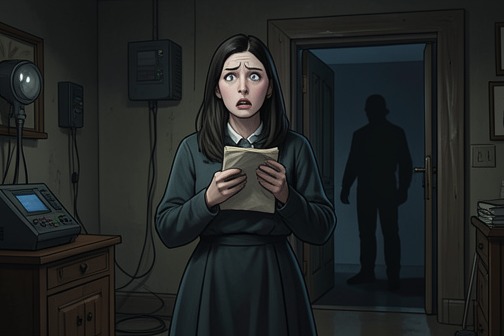
[Ryanna tells her family about the pregnancy](entity:event-recall-event-ryanna-tells-her-family-81d87527be3f) at a decisive threshold in the story: a private pregnancy arranged through a three-million-dollar contract becomes a family crisis that must be explained, judged, and ultimately absorbed. The episode begins in fear and embarrassment but ends with her mother’s promise of support, shifting Ryanna from concealment toward family-backed accountability.
## Causes and Background
Ryanna’s disclosure follows several destabilizing changes. Her expected chemical-engineering position at [NKL Laboratories](entity:organization-recall-organization-nkl-laboratories-bcf752ce39d1) collapsed when the company instituted a hiring freeze after disappointing earnings sent its stock price plunging. At the same time, she had accepted [Andrew Rutledge](entity:character-recall-character-andrew-rutledge-fa3770688c94)’s proposal that she conceive, carry, and bear his child under a contractual arrangement worth three million dollars. She had initially hesitated because motherhood was not part of her plans until at least her thirties and because pregnancy represented a responsibility for which she was unsure she was ready. The money, however, promised relief from student loans and from the uncertainty of unemployment.
By the time she drove ninety miles north to Rushton, Ryanna was seven weeks pregnant and understood that the arrangement could no longer remain an abstract bargain between two adults. She still believed her mother thought of her as a newly graduated chemical engineer with a secure, high-paying career. Instead, she arrived as an unemployed young woman carrying Andrew’s child and bound to him by contracts whose terms would be difficult for her family to understand. Her fear was therefore not only about announcing the pregnancy; it was about revealing the collapse of the identity her mother believed she had built.
## The Announcement at Rachelle’s House
Ryanna sits in her car in her mother’s driveway, too frightened to enter. Her younger aunt, [Aileen Howard](entity:character-recall-character-aileen-howard-41ca2f33d1ec), arrives in an Audi and accidentally removes Ryanna’s opportunity to retreat by blocking her car. Aileen quickly recognizes the reason for Ryanna’s anxiety, reading both her nervousness and what she calls her pregnancy glow. The recognition gives Ryanna a measure of relief, but it also means that the announcement will occur with an outspoken witness beside her rather than in the private conversation Ryanna had imagined.
When [Rachelle Owens](entity:character-recall-character-rachelle-owens-fe81940e07f9) opens the door, she greets her daughter warmly and embraces her. Aileen abruptly announces that Ryanna is pregnant, treating the revelation as something that should be stated without preparation. Rachelle’s welcome collapses into shock, and she asks Ryanna whether the news is true. Ryanna nods, then leads her mother into the living room, where Rachelle sits on a loveseat, Ryanna takes the facing chair, and Aileen sits beside Rachelle. The physical arrangement turns the family room into an interrogation space, reflecting Ryanna’s sense that she is surrounded by two people demanding answers.
Rachelle’s stress appears in her repeated adjustment of the barrette holding her ponytail. She asks how far along Ryanna is, who the father is, how long the couple has been together, whether they will marry, whether Ryanna intends to continue the pregnancy, how the pregnancy happened, and how a twenty-one-year-old will manage. Her questions combine concern, disappointment, practical anxiety, and an effort to recover a coherent account of her daughter’s life. Aileen intensifies the pressure by mentioning abortion, but Ryanna immediately rejects that possibility and states that she will continue the pregnancy.
## The Contract Becomes Family Knowledge
Ryanna then explains the arrangement in financial and contractual terms. Andrew Rutledge is paying her three million dollars to conceive, carry, and bear his child. She has already received one million dollars after signing the contracts; another million will follow once a doctor confirms the pregnancy, and the final million will be paid after the baby is born. The installment structure makes the pregnancy inseparable from money, documentation, medical confirmation, and a future birth. What Ryanna has experienced as a negotiated solution to financial and personal uncertainty sounds to her family like an implausible bargain.
Rachelle and Aileen initially laugh because the arrangement seems too extraordinary to be true. Aileen interprets it as evidence that Ryanna has secured her future by attaching herself to a wealthy man, while Rachelle remains incredulous about why anyone would pay so much for a child. Ryanna identifies Andrew by name and explains that he wanted a child but had been unable to find the right woman with whom to settle down and start a family. The explanation begins to move the event away from a story of anonymous exploitation or fantasy and toward the specific relationship at its center.
The revelation becomes undeniable when Aileen shows Rachelle a Fortune magazine image of Andrew. Rachelle studies the photograph, her jaw dropping as recognition replaces disbelief, and then asks Ryanna what she has gotten herself into. Ryanna cannot offer the confidence she once possessed. She admits that she thought she knew what she was doing when the arrangement began but is no longer sure. That admission is the emotional truth beneath the contract: the agreement has delivered money and a pregnancy, but it has not provided Ryanna with certainty about love, marriage, motherhood, or the future.
## Family Response and Aftermath
Rachelle’s response changes from questioning to protection. After seeing Ryanna’s uncertainty, she crosses the room and embraces her, soothing her daughter rather than continuing the interrogation. She promises that they will get through the situation. The reassurance does not erase the unusual circumstances, the financial power surrounding the pregnancy, or the family’s unresolved concerns, but it relieves the immediate pressure Ryanna has been carrying alone. The episode’s value shift is clear: a feared rejection becomes an imperfect but genuine alliance.
The disclosure also establishes that the pregnancy affects more than Ryanna and Andrew. Their contractual childbearing arrangement now enters the family system, where Rachelle and Aileen claim the right to scrutinize whether Ryanna and the baby are being protected. Aileen later warns Andrew that, although he may be accustomed to directing thousands of employees at [Rutledge Electronics](entity:organization-recall-organization-rutledge-electro-f50191ada9fc), she and Rachelle will look after Ryanna’s interests and those of the baby. Their intervention makes the agreement a matter of family oversight as well as private consent.
Ryanna’s family must hear the story several more times before its reality fully sinks in, and even then Rachelle continues to shake her head in disbelief. Yet the episode does not end with expulsion or a demand that Ryanna abandon the pregnancy. It ends with the family beginning the slower work of understanding the arrangement. The disclosure therefore becomes an early form of kinship-making: the unborn child, the absent Andrew, and the contractual terms are brought into the circle of Rachelle and Aileen’s concern.
## Narrative Significance
The event connects several competing identities in Ryanna’s life. Her professional future has been interrupted by NKL Laboratories’ hiring freeze; her bodily future is governed by pregnancy; her financial future is tied to staged payments; and her emotional future is increasingly bound to Andrew. Telling her family forces these separate pressures into one account. She can no longer present herself simply as a student overcoming unemployment, because the pregnancy has made her a prospective mother, contractual participant, and possible partner in Andrew’s family.
The disclosure also anticipates later tensions between family responsibility, marriage, and work. Andrew and Ryanna will reconcile as parents, and Ryanna will continue to want a career beyond the home even after the baby becomes her main priority. Her later fear that she may be a single mother in all but name, followed by the couple’s effort to repair their marriage after their first child’s birth, shows why this announcement matters beyond the immediate scene. It is the moment when Ryanna’s pregnancy becomes publicly legible within her family and when support, judgment, and protection begin to surround the relationship that produced it.
Event 13
Andrew meets Ryanna's family

[Andrew meets Ryanna's family](entity:event-recall-event-andrew-meets-ryanna-s-f-5207984d41b1) at a decisive threshold in the relationship between a private contractual arrangement and a publicly recognized family bond. He arrives at the Owens home because Ryanna is facing her mother's shock over the pregnancy alone, and his presence forces the agreement, the unborn child, and his relationship with Ryanna into the same room. The visit is therefore more than an introduction: it tests whether Andrew can assume responsibility beyond the controlled world of [Rutledge Electronics](entity:organization-recall-organization-rutledge-electro-f50191ada9fc) and whether Ryanna's family can distinguish his genuine commitment from the commercial logic that originally shaped their relationship.
## Causes and Background
Andrew's visit begins after Ryanna calls him for relief from the tense confrontation with her mother and aunt. He had left a voice mail checking on her after she told him she was nervous about explaining “us and the baby.” When she returns the call, he immediately asks whether she is all right. Ryanna says that she is fine but that her mother may not be, because Rachelle is still in shock.
Ryanna tells Andrew that perhaps his physical presence would help Rachelle understand the situation. Andrew responds that she does not have to handle the disclosure alone and that he wants to be there. His urgency persuades Ryanna that he is sincere, even though she remains anxious about bringing him into a hostile domestic setting. The family has learned that she is seven weeks pregnant, but the pregnancy is inseparable from the agreement she made with Andrew after her job offer from [NKL Laboratories](entity:organization-recall-organization-nkl-laboratories-bcf752ce39d1) fell through. Rachelle therefore confronts not only an unexpected pregnancy but also the desperation and unequal circumstances surrounding its origin.
Andrew is also leaving behind an urgent professional crisis. Ryanna reminds him that he was supposed to meet senior executives about dealing with the board of directors of Rutledge Electronics. His decision to come anyway establishes the value shift at the center of the event: corporate obligations, which normally organize his time and authority, yield to the immediate need to stand beside Ryanna. He tells her that nothing is more important than this and that he would accomplish nothing with the executives while thinking only about her.
## Arrival at the Owens Home
Through the living-room window, Ryanna sees an unfamiliar black SUV approach. Because her car and Aileen's already occupy the driveway, Andrew awkwardly pulls onto the edge of the lawn. The arrival is conspicuous and slightly disruptive, visually announcing that the powerful executive from Ryanna's secret arrangement has entered her family’s ordinary domestic space.
Andrew emerges from the driver's seat in jeans, with his hands in his pockets, and tells Ryanna that he will be fine. He then takes her hand and intertwines his fingers with hers, adding that they will be fine. Ryanna is not convinced, but she leads him inside while they remain hand in hand. That gesture gives the meeting an intimacy that the contract cannot explain and places Andrew beside her rather than merely before her family as a businessman negotiating terms.
Rachelle and Aileen are waiting in the living room. Rachelle's arms are folded and her eyes narrowed with suspicion, while Aileen smiles as though Andrew were the person who could provide a winning lottery ticket. Ryanna formally introduces [Andrew Rutledge](entity:character-recall-character-andrew-rutledge-fa3770688c94) to [Rachelle Owens](entity:character-recall-character-rachelle-owens-fe81940e07f9) and [Aileen Howard](entity:character-recall-character-aileen-howard-41ca2f33d1ec). Aileen immediately steps forward, pushes Ryanna aside, and embraces Andrew with the extravagant enthusiasm she had shown when her husband gave her a Chanel bag. Her welcome is warm in appearance but already marked by her attraction to Andrew's wealth and status.
## Family Scrutiny and the Agreement
Aileen claims that Ryanna has told the family all about Andrew, although Ryanna corrects her by saying that she had disclosed only his name and that Aileen had spent the previous three hours searching for the rest online. Aileen quickly restores her polished manner and insists that Ryanna's future is serious. She tells Andrew that she and Rachelle will not allow Ryanna to be taken advantage of and warns him that they are watching out for Ryanna's interests and those of the baby.
Ryanna is outraged because neither she nor her aunt has evidence that Andrew has exploited her or neglected the baby's interests. Rachelle, however, offers a more measured assessment. Carrying a tray with coffee, she tells Andrew that, from what Ryanna has explained about their agreement, he has been more than fair. Andrew asks her to call him Andrew, and his hopeful smile reveals that he wants to be received as a person rather than treated only as the wealthy party to a bargain.
Rachelle still says that she cannot approve of her daughter entering such an agreement. She wishes Ryanna had come to her after the NKL Laboratories offer fell through instead of becoming desperate enough to accept the arrangement. Her objection identifies the family’s central concern: even if the contract is formally fair, its fairness cannot be separated from Ryanna's financial vulnerability and youth. Rachelle also asks whether Andrew's promise that Ryanna may remain part of the child's life after birth extends to her as the grandmother, shifting the discussion from money and legality toward continuing kinship.
## The Rejected Proposal and Emotional Disclosure
During the meeting, Andrew reveals that he had already asked Ryanna to marry him and that she had refused. Rachelle and Aileen react with matching astonishment, but Andrew does not defend the proposal as an act of romance. Instead, he concedes that Ryanna was right to reject it because he had presented marriage as something beneficial to him and Rutledge Electronics rather than as an expression of his feelings.
Andrew then states that he failed to tell Ryanna how much he loved her or that he did not want to live without her. The admission changes the meaning of the visit. Until this point, the family has been evaluating a powerful man connected to Ryanna through a questionable agreement; now Andrew exposes a vulnerability that cannot be reduced to corporate advantage. He kneels before Ryanna, turning the family introduction into the emotional staging ground for a renewed proposal.
Later, Andrew explains that the separation after their conflict gave him clarity. He is accustomed to power and control, and loving Ryanna frightened him because it placed something important outside his command. He realized that he would lose her if he refused to be open and honest, so he chose to expose feelings he had never before experienced strongly enough to make such a sacrifice. The meeting thus records a movement from managerial control to emotional accountability.
## Consequences and Significance
The visit brings three family systems into direct contact: Ryanna and Andrew as prospective parents, Ryanna and her relatives as a daughter and niece under protection, and Andrew as the leader of Rutledge Electronics whose private choices may affect the company. The unborn child intensifies every boundary dispute. Rachelle asks for recognition as a grandmother, Aileen positions herself as a guardian of Ryanna's interests while displaying material enthusiasm, and Andrew must show that parental participation will not be limited to contractual obligations.
The event also prepares the relationship's later development. Andrew has previously insisted that the arrangement remain private and that his staff protect it from exposure, but the family's presence makes secrecy emotionally unstable. Ryanna and Andrew will later confront the danger of treating one another as separate from the child they are expecting. Andrew's earlier demand that they never shut each other out again, especially now that they are becoming parents, gains practical meaning here: communication must extend beyond romantic reconciliation to family integration.
The same conflict resurfaces after the birth of AJ, when Andrew's work absorbs too much of his time and Ryanna fears becoming a single mother in all but name. Their argument eventually leads them to spend more time together, with Andrew coming home earlier and Ryanna setting aside distractions so they can rebuild closeness. When Ryanna later considers a second child, she recognizes that expanding the family may create new strains but believes they can withstand them together. In that larger arc, Andrew meets Ryanna's family as the first visible test of whether he can convert a three-million-dollar conception arrangement into sustained emotional, parental, and marital responsibility.
Event 14
Andrew’s second marriage proposal and reconciliation with Ryanna

[Andrew’s second marriage proposal and reconciliation with Ryanna](entity:event-recall-event-andrew-s-second-marriag-f22d7142303a) are the decisive emotional reversal through which their contractual arrangement becomes an acknowledged love marriage. After a painful estrangement, Andrew accepts that a marriage intended to protect [Rutledge Electronics](entity:organization-recall-organization-rutledge-electro-f50191ada9fc) cannot substitute for emotional honesty. His renewed proposal, made in front of Ryanna’s mother and Aunt Aileen, joins reconciliation to a public declaration that he loves Ryanna, wants a life with her, and is prepared to relinquish the control that had defined his conduct.
## Causes and Background
The proposal grows out of a relationship shaped by incompatible pressures. Ryanna first encounters Andrew while facing the collapse of her expected chemical-engineering career: [NKL Laboratories](entity:organization-recall-organization-nkl-laboratories-bcf752ce39d1) withdraws her job offer after disappointing earnings cause its stock price to plunge and the company institutes a hiring freeze. Against that uncertainty, Andrew offers three million dollars for forty weeks of pregnancy. Ryanna recognizes the financial force of the arrangement, particularly its potential to erase her student loans and free her from dependence on uncertain employment, but she also admits that she had not expected to become a mother until at least her thirties and is unsure whether she is ready for the responsibility of having a baby.
The arrangement initially separates biological parenthood from romantic commitment. Andrew promises that he will bear most of the responsibility after the baby is born, while acknowledging the physical burden Ryanna will carry during the forty-week pregnancy. Their intimacy therefore develops inside a structure of money, secrecy, prescribed parental participation, and unequal corporate power. The later proposal matters because it must answer a question the contract cannot settle: whether Andrew and Ryanna are merely fulfilling an agreement or choosing one another beyond its terms.
The immediate crisis intensifies after [Natalie](entity:character-recall-character-natalie-bcb3c4a4ef9f)’s betrayal and the reporter’s public insult toward Ryanna. Andrew’s response is complicated by his own loss of control; during a stressful episode at his office, he rants while [Colleen](entity:character-recall-character-colleen-7164b7244882) explains that he sometimes thinks out loud. Ryanna is frightened and angered by this behavior, while Andrew feels wounded when she withdraws and stops answering his calls. Their conflict produces a temporary separation even though they remain under the same roof, making physical proximity a sign of emotional distance rather than security.
## The Reconciliation
The reconciliation begins when Andrew finds Ryanna and the two finally speak after their fight. When he reaches out to tuck a strand of hair behind her ear, Ryanna breaks down in tears and he takes her into his arms. Although they have been apart only for hours in the immediate aftermath of their argument, the embrace makes the separation feel much longer. Her tears release the anger and tension accumulated since the reporter called her a “gold-digging whore,” while Andrew’s physical reassurance restores a form of closeness that argument and silence had interrupted.
Their conversation also establishes a new rule for handling conflict. Andrew says that nothing is worse than being ignored and insists that they must not shut each other out, especially now that they are going to be parents. Ryanna defends the need for a cooling-off period, but Andrew explains that the silent treatment he experienced during his parents’ marriage poisoned their home before their divorce. The compromise is not that either partner completely wins: Ryanna’s need for space is recognized, while Andrew’s need to resolve conflict through conversation is also made legitimate.
Ryanna then reveals that her distress has another cause: she is pregnant. She tells Andrew that she discovered the pregnancy after buying a pregnancy test and taking it after leaving his office. The revelation changes the meaning of the reconciliation. They are no longer repairing only a romance threatened by scandal; they are attempting to establish a dependable parental partnership while the pregnancy makes every unresolved disagreement more consequential.
## The Second Proposal
The second proposal is distinguished from Andrew’s earlier attempt by its rejection of corporate calculation. When Aunt Aileen argues that marriage is necessary to demonstrate what Ryanna means to him and to protect her interests, Andrew discloses that Ryanna has already rejected his first proposal. He admits that he framed that proposal in terms of what marriage would do for him and Rutledge Electronics rather than expressing his actual feelings. In doing so, he validates Ryanna’s refusal instead of treating it as an obstacle to be overcome.
Andrew then kneels before Ryanna and produces a small black velvet box concealed beneath his bulky gray fisherman’s sweater. Inside is a perfect pear-shaped diamond ring, the same distinctive object that gives the moment a material form without reducing it to a financial transaction. He tells Ryanna that he has loved her from the start, that Rutledge Electronics and its board have nothing to do with his wish to marry her, and that she is his first thought on waking and his last thought before sleep. His appeal culminates in the admission that he does not want to live without her.
Ryanna accepts immediately and tearfully, embracing Andrew as he buries his head against her chest. She answers that she loves him too and cannot live without him. Their mutual declaration resolves the central imbalance of the first proposal: Andrew is no longer asking Ryanna to marry him because marriage would stabilize his company’s reputation, but because he openly identifies her as the person with whom he wants to share his life.
## Family and Domestic Consequences
The proposal takes place in Ryanna’s mother’s home, where Aileen and her mother have been questioning the pregnancy, the identity of the father, the length of the relationship, and the couple’s plans. Ryanna’s mother is visibly overwhelmed when Ryanna confirms the pregnancy, and Aileen adopts a protective, confrontational stance, warning Andrew that the family will defend Ryanna’s interests and those of the baby. Andrew’s proposal therefore occurs within a family system that is evaluating his intentions rather than simply celebrating his wealth.
After the reconciliation, Ryanna and Andrew decide against both the lavish spectacle Aileen imagines and a ceremony at [City Hall](entity:location-recall-location-city-hall-10294251b4ee). Ryanna chooses a wedding at the estate because she has come to regard the place as home. Andrew acknowledges that the preceding three weeks were torture: although they lived under the same roof, the estrangement made them feel a million miles apart. He accepts that Ryanna needed time to determine whether they wanted the same future, and he says that the solitude clarified his feelings.
Andrew also identifies vulnerability as the personal cost of the second proposal. He is accustomed to power and control as the head of Rutledge Electronics, but he cannot command himself to stop loving Ryanna or guarantee that she will remain with him. He recognizes that emotional exposure frightened him and that he had to reveal his feelings because otherwise he would lose her. The proposal thus represents not only romantic persistence but a change in the terms of his authority: corporate power cannot secure intimate consent.
## Longer-Term Reconciliation
The second proposal does not eliminate later strain. Once Andrew and Ryanna become parents, work, childcare, sex, and household attention create new pressures. Ryanna tells Andrew that she is reading about how to be a good mother and fears becoming a single mother in all but name because he works so much. Their argument exposes the danger that a successful marriage can reproduce the distance the proposal was meant to overcome.
They respond by changing their daily conduct rather than relying only on the promise made at the proposal. Andrew begins coming home earlier, while Ryanna puts aside distractions such as her iPad to focus on him. Their renewed effort gradually restores the closeness they had before AJ’s birth. Later, while watching Andrew hold their son, Ryanna wonders whether a second child will test the marriage in similar ways, but she believes they can withstand future storms together and emerge stronger.
That confidence is tested and affirmed when Ryanna announces that she is pregnant again. She explains that a doctor has confirmed the positive pregnancy test and that she and Andrew will give AJ a little brother or sister. The announcement extends the proposal’s promise beyond a single reconciliation: the couple’s chosen family continues to grow, while their marriage remains an ongoing practice of communication, shared parental responsibility, and renewed commitment rather than a final escape from conflict.
## Narrative Significance
As a romance event, the second proposal functions as the grand gesture that converts an unstable contractual bond into a voluntary emotional commitment. Its force comes from contrast. The first proposal treated marriage as a solution for Andrew’s interests and Rutledge Electronics; the second names love, dependence, and vulnerability as its reasons. The ring, the kneeling gesture, Ryanna’s tears, and their reciprocal declarations make private feeling legible before her family.
The event also binds several narrative conflicts together: career uncertainty and family responsibility, corporate reputation and personal truth, contractual parenthood and emotional kinship, and control and vulnerability. Ryanna’s later withdrawal from a chemical-engineering position does not erase her professional identity; she tells Andrew that she may return to graduate school and pursue her dream when the baby is older, and he supports that ambition. Their reconciliation therefore does not require her to surrender independence. Instead, its lasting significance lies in the couple’s attempt to make love, parenthood, and individual aspiration coexist after the economic bargain that first brought them together has ceased to be sufficient.
Event 15
Ryanna and Andrew’s wedding

[Ryanna and Andrew’s wedding](entity:event-recall-event-ryanna-and-andrew-s-wed-e1feb47b0168) is the decisive ceremony through which their relationship changes from a concealed childbearing arrangement into a recognized marriage and family. Held three weeks after Andrew’s second proposal, the private celebration joins personal commitment, family acknowledgment, legal protection, and the deliberate destruction of the contract that first brought them together.
## Causes and Background
The wedding follows a period of separation, emotional injury, and reconciliation. Andrew had initially approached marriage as a solution advantageous to himself and [Rutledge Electronics](entity:organization-recall-organization-rutledge-electro-f50191ada9fc), but Ryanna rejected that proposal because it did not express love. During their later reconciliation, Andrew acknowledged that he loved Ryanna, did not want to live without her, and had been frightened by the vulnerability involved in surrendering control. His admission changed the meaning of marriage from corporate damage control to an emotional choice.
The couple also understood that they were becoming parents. Andrew told Ryanna that they should never again shut each other out, especially because they were going to be parents. That promise emerged from a conflict in which his distress over being ignored collided with her anger over his failure to take seriously the reporter’s insult against her. Their reunion therefore carried both romantic and practical stakes: they had to build a durable partnership while preparing for a child and protecting the secrecy of their former arrangement.
## Ceremony and Setting
The ceremony is explicitly small and intimate. A silver-haired justice of the peace, described as a friend of Andrew’s, pronounced them husband and wife and invited Andrew to kiss the bride. Their lips had barely touched when the assembled friends and relatives applauded. Andrew held Ryanna around the waist as they turned toward the group, making the private vow visible to the people whose acceptance mattered most.
Ryanna selected the ceremony’s location: a clearing beside a centuries-old oak whose leaves were turning red and rust. Andrew had preferred one of the ballrooms or staterooms inside his mansion, but she persuaded him to marry outdoors. Sunlight and a light breeze made the setting feel like a blessing upon their union, while the old oak supplied a natural image of endurance and continuity. The outdoor location also gave the wedding a character distinct from Andrew’s wealth and corporate world: although he could have staged an elaborate mansion ceremony, the marriage is shaped by Ryanna’s preference for intimacy and natural beauty.
[Colleen](entity:character-recall-character-colleen-7164b7244882) handled most of the logistics, and a wedding planner arranged the details so efficiently that the event appeared to have been planned for months rather than assembled within a few weeks. The compressed timetable underscores the wedding’s urgency, but the carefully managed result prevents that urgency from making the ceremony seem careless or improvised.
## Family, Secrecy, and Legal Structure
Ryanna’s family attends the ceremony. Her mother offers a discreet thumbs-up, while her aunt Aileen and uncle Donald stand nearby; Ryanna’s father, his wife, and their children form another part of the gathering. Andrew had met Ryanna’s father only two days earlier, when the couple disclosed the pregnancy over an awkward lunch. Although the news initially shocked him, they persuaded him that love, rather than pregnancy alone, was the reason for the marriage.
The wedding nonetheless contains a major omission. Neither Ryanna nor Andrew tells her father about the arrangement that originally united them. By the wedding, Andrew regards the contract as obsolete and has instructed his attorneys to destroy every copy a week earlier. The destruction marks a symbolic and practical break with the relationship’s commercial beginning: the former agreement no longer defines their obligations, because the couple now treats their vows as binding enough.
Marriage does not erase every legal pressure. Ryanna signs the prenuptial agreement demanded by the Rutledge Electronics board of directors. If the marriage ended, she would waive rights to Andrew’s shares in Rutledge Electronics, a condition presented as necessary to satisfy shareholders. Andrew nevertheless adds a clause that would leave her well provided for after a divorce, making the original three-million-dollar payment appear small by comparison. The arrangement preserves the company’s financial safeguards even as the couple claims that money is not the basis of their union.
## Marital Meaning and Later Consequences
Ryanna insists that she is not marrying Andrew for his money, a concern she hopes his parents will not share. Andrew introduces her to both parents during the weeks before the ceremony; she finds them pleasant but distant. The wedding therefore joins two families without producing instant emotional intimacy, and it leaves Ryanna conscious of how class, corporate wealth, race, and public suspicion surround her entry into the Rutledge family.
The ceremony also becomes a promise tested by later domestic strain. After their son AJ is born, Andrew’s long hours and Ryanna’s concentration on learning how to be a good mother make her feel like a single parent in all but name. Their argument exposes how easily work and parenthood can displace marital attention. Andrew admits that he has not been home enough, and both partners change their behavior: he begins coming home earlier, while Ryanna sets aside distractions such as her iPad to focus on him. Their renewed effort gradually restores the closeness they had before AJ’s birth.
That repair gives the wedding significance beyond the ceremony itself. When Ryanna later considers whether a second child might create similar pressures, she expects growing pains but trusts that the couple can endure them together. The marriage is thus not presented as a final escape from conflict. Its lasting value lies in the repeated work of communication, emotional disclosure, shared parenthood, and renewed attention.
## Narrative Significance
The wedding converts a relationship organized around secrecy, payment, and contractual control into one organized around chosen kinship and continuing responsibility. Andrew’s public identity as the leader of Rutledge Electronics remains part of the marriage, and the board’s prenuptial demands show that corporate interests still press upon the couple. Yet the destroyed agreement, the outdoor vows, the family witnesses, and Andrew’s confession of love all shift the center of authority away from the original transaction.
The event also completes a major emotional reversal. Earlier, Andrew’s uncontrolled office outburst frightened Ryanna, while their separation left both partners miserable. In reconciliation, physical embrace and open admission replace anger and silence; at the wedding, that repaired intimacy becomes a formal social bond. The ceremony therefore functions as both romantic culmination and structural redefinition: it joins two people who began as contractual partners, acknowledges the child already linking them, and establishes a marriage whose stability must be proven through the ordinary pressures of family life.
Event 16
Rutledge Electronics’ microsystems acquisition

[Rutledge Electronics’ microsystems acquisition](entity:event-recall-event-rutledge-electronics-mi-7880896023be) is not merely a business transaction in the novel; it is the pressure point where [Andrew Rutledge](entity:character-recall-character-andrew-rutledge-fa3770688c94)’s authority as CEO, his conflict with the board, the secrecy of his arrangement with [Ryanna Owens](entity:character-recall-character-ryanna-owens-6da1df986c4d), and the later demands of family life converge. Conceived as a way to strengthen the company and defeat internal opponents, the acquisition succeeds, but its success brings Andrew greater corporate obligations rather than the freedom he expected.
## Corporate Background and Strategic Stakes
The acquisition emerges against a broader dispute over the future of [Rutledge Electronics](entity:organization-recall-organization-rutledge-electro-f50191ada9fc). Andrew wants to broaden the company’s horizons and expand beyond its established concentration on electronics, while much of the board prefers to preserve that focus. He treats the microsystems deal as a strategic extension of the company’s capabilities, but the disagreement also becomes a contest over his judgment and continued control.
The stakes are unusually high because Andrew leads a publicly traded, billion-dollar company. He fears that disclosure of his private arrangement with Ryanna would give hostile board members grounds to portray him as reckless and remove him as CEO. The acquisition therefore becomes more than a commercial project: its completion would change the balance of power inside Rutledge Electronics. Andrew believes that, once the transaction created new board members who could outvote his principal opponents, the company would be able to withstand revelations about Ryanna and the baby.
## The Acquisition During the Private Crisis
When details of the arrangement begin to leak, Andrew reacts not only to the threat of scandal but also to its timing. He believes that only a few more months are needed to complete the acquisition, after which the board’s composition would give him greater protection. His fear is that the publicity will allow Bohane and Stolliccio to mobilize other directors against him, cite the arrangement as evidence of poor judgment, remove him from the chief executive position, and derail the transaction they already oppose.
This crisis exposes the unequal meanings the acquisition carries for Andrew and Ryanna. Andrew sees billions of dollars, corporate control, and the future of Rutledge Electronics at risk. Ryanna, after being called a “gold-digging whore,” insists that her character and dignity are also endangered. His initial response places the company’s impending loss against her reputational injury, revealing how completely the acquisition has become the measure through which he evaluates danger.
## Completion and Public Consequences
The acquisition eventually receives the board of directors’ approval. Its completion changes the public and institutional context around Andrew’s marriage to Ryanna. When Rutledge Electronics’ public relations department announces that Andrew has married his girlfriend, the media pays more attention to the company’s increased power and prominence following the microsystems acquisition than to [Natalie](entity:character-recall-character-natalie-bcb3c4a4ef9f)’s attempts to spread lurid allegations about Ryanna and describe the marriage as a sham.
The result is an ironic reversal. Andrew had feared that the private arrangement would destroy his authority before the deal was complete; after approval, the company’s expansion helps displace the scandal in the public narrative. The acquisition does not erase the threat to Ryanna’s reputation, but it gives Rutledge Electronics a stronger public story and makes corporate growth more visible than the rumors surrounding the couple.
## Effects on Leadership and Family Life
The transaction is supposed to give Andrew greater security and allow him to spend more time at home. Instead, Rutledge Electronics grows rapidly, and the acquisition creates additional expectations. Board members and shareholders press Andrew to pursue still more acquisitions that will increase the company’s wealth and power. The deal therefore solves one institutional problem while producing a larger workload and a continuing cycle of expansion.
That reversal reaches directly into [Andrew and Ryanna’s marriage](entity:state-recall-state-andrew-and-ryanna-s-mar-0ed0b219eac2). Andrew is frequently absent, while Ryanna’s first year of motherhood becomes so consuming that she nearly fails to notice how little he is home. Their different forms of responsibility pull them apart: his time is absorbed by corporate governance and shareholder demands, while hers is absorbed by intensive childcare, parenting books, and first-time-parent message boards. The acquisition thus becomes an indirect cause of marital neglect even though it had been presented as a means of securing their future.
The strain becomes explicit when Andrew points out that they have gone a week without making love. Ryanna answers that his absence makes their sexual relationship suffer and fears she is becoming a single mother in all but name. Their argument is followed by an acknowledgment that both have been failing to protect their time together. Andrew begins coming home earlier, and Ryanna sets aside distractions to concentrate on him; gradually, they recover the closeness they had before the birth of their son, AJ.
## Narrative Significance
The acquisition functions as a structural counterpart to the couple’s changing relationship. At first, Andrew treats corporate success as the condition that will protect his private life: completing the deal will secure his position, defeat hostile directors, and make room for family. Once the acquisition succeeds, however, institutional success expands the demands placed on him, demonstrating that power does not automatically produce personal freedom.
Its significance also lies in the way it converts a private reproductive arrangement into a question of corporate governance. The possibility that the arrangement might become public threatens Andrew’s leadership, while the acquisition offers him a route to consolidate authority before the scandal can be used against him. Yet the same corporate system that rewards expansion then claims more of his time. By the later domestic scenes, Andrew and Ryanna understand that preserving their marriage requires deliberate choices separate from the company’s growth. Their confidence that they can face the challenges of a second child together marks the final contrast: the acquisition strengthens Rutledge Electronics, but the couple must actively strengthen their family.
Event 17
Birth of Andrew Gerald Rutledge Jr.
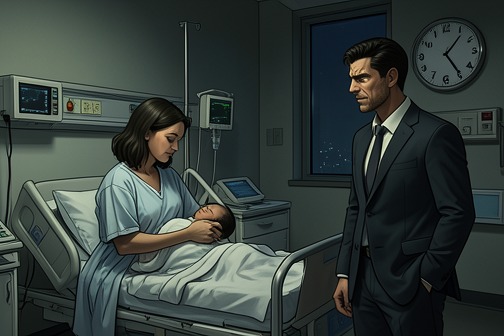
The [Birth of Andrew Gerald Rutledge Jr.](entity:event-recall-event-birth-of-andrew-gerald-fc3c3583bdc7) is the culminating event of the first pregnancy undertaken by [Ryanna Owens and Andrew Rutledge](entity:relation-recall-relation-ryanna-owens-and-and-e55a14d6473b). It gives physical reality to a child whose conception began within a three-million-dollar arrangement, while also confirming the couple’s movement from contractual partners toward a family joined by love, marriage, and shared parenthood. The birth therefore resolves one plot line while opening the more difficult question of how intimacy and responsibility will survive after the child arrives.
## Causes and Background
The pregnancy begins at a moment of instability for [Ryanna Owens](entity:character-recall-character-ryanna-owens-6da1df986c4d). Her expected position at [NKL Laboratories](entity:organization-recall-organization-nkl-laboratories-bcf752ce39d1) disappears when the company imposes a hiring freeze after disappointing earnings, leaving her with student loans and no secure professional future. [Andrew Rutledge](entity:character-recall-character-andrew-rutledge-fa3770688c94)’s offer of three million dollars for forty weeks of pregnancy presents parenthood first as paid work, with the promise that the money could erase her financial anxiety. Ryanna is not initially ready to become a mother and openly recognizes pregnancy as a major responsibility, but the arrangement makes the decision materially possible.
The proposed arrangement also carries emotional and ethical complications. Andrew insists that he will bear most of the responsibility after the baby is born, while acknowledging that Ryanna will endure the bodily demands of the forty-week pregnancy. Their agreement therefore separates, at least in theory, gestation from later parenting. That separation becomes increasingly unstable as Ryanna and Andrew fall in love, as she becomes pregnant, and as the pregnancy is disclosed to her family. The child’s arrival ultimately tests whether their relationship can exist beyond the terms that created it.
By the time delivery approaches, Andrew has declared that his wish to marry Ryanna is not merely a strategy for [Rutledge Electronics](entity:organization-recall-organization-rutledge-electro-f50191ada9fc) or its board. He tells her that he loves her and does not want to live without her, and Ryanna accepts his renewed proposal. Their marriage changes the meaning of the impending birth: the baby is no longer simply the product promised by a contract but the first child of a couple who have publicly and privately chosen one another. Even so, the history of the arrangement remains part of the event’s tension, because the family is built across the boundary between business obligation and emotional commitment.
## What Happens
Ryanna plans to give birth naturally, but the baby turns into a breech position a few weeks before the due date and remains there at her fortieth-week check-in. The obstetrician consequently schedules a Caesarean section. The change from an anticipated natural birth to surgery places medical planning at the center of the delivery and gives the event a sharper note of uncertainty. Ryanna covers her fear with crankiness, while Andrew tries to reassure her that the operation should go well because their obstetrician is among the best in the state.
Andrew’s reassurance is also intimate rather than merely practical. When he senses that Ryanna is masking anxiety, he kisses her and strokes her hair, telling her that she and the baby will be fine. His response contrasts with the authority and pressure associated with his corporate role: at the hospital, his essential function is not to command a company but to remain emotionally present for Ryanna as she faces surgery. The birth thus turns his earlier promise of parental responsibility into an immediate act of care.
At 9:17 that night, [Andrew Gerald Rutledge Jr.](entity:character-recall-character-andrew-gerald-rutle-2723bce6bea1) is born weighing seven pounds and eight ounces. His first cry produces in Ryanna a happiness and contentment she has never previously known. Andrew’s love has already given her emotional security, but hearing the newborn cry creates a distinct and deeper joy, one rooted in the child’s independent presence. The moment is not only the completion of a pregnancy; it is the first encounter with the person whose existence has reorganized both adults’ lives.
Andrew appears equally overwhelmed when the doctor allows him to cut the umbilical cord. After the nurses clean the newborn and wrap him in a blanket, they return him to Ryanna. She and Andrew look together at their son’s tiny, wrinkled face, and the shared gaze converts the delivery room into the first scene of their family life. Andrew thanks Ryanna for giving him everything he wanted, while she answers that he has done the same for her. Their kiss seals the event as a mutual exchange rather than a service completed by one person for another.
## Participants and Family Reorganization
The birth brings together three roles that had previously been separated: Ryanna as the woman carrying the pregnancy, Andrew as the intended father and partner, and Andrew Gerald Rutledge Jr. as the child whose arrival makes those roles concrete. Andrew’s earlier insistence that they would be parents together is confirmed by his presence during the delivery and by his wonder at cutting the cord. Ryanna’s position likewise changes from contracted gestational participant to mother whose joy is inseparable from the newborn himself.
The event also follows an extended struggle over family boundaries. Ryanna’s mother and [Aileen Howard](entity:character-recall-character-aileen-howard-41ca2f33d1ec) react to the pregnancy with alarm and questions about the father, marriage, the continuation of the pregnancy, and Ryanna’s ability to manage motherhood at twenty-one. Aileen warns Andrew that the family will protect Ryanna and the baby from being taken advantage of, bringing the possible conflict between the couple, the older generation, and Andrew’s corporate power into the open. The birth does not erase those concerns, but it places the infant at the center of a family system that must now accommodate him rather than merely debate the circumstances of his conception.
Andrew and Ryanna’s promise not to shut each other out is especially important in retrospect. Andrew has described the silent treatment that preceded his parents’ divorce as an atmosphere that made him feel forced to take sides, while Ryanna argues that temporary space can prevent words spoken in anger. Their agreement to balance cooling off with talking things through becomes a prospective model for parenting partners. The newborn arrives not into a frictionless household but into a relationship consciously trying to build better boundaries than the ones either adult experienced before.
## Consequences and Aftermath
The immediate consequence is a sense of completion. With Andrew Gerald Rutledge Jr. finally present, Ryanna feels that life is complete and that she could not be happier. The scene’s emotional resolution rests on the convergence of three developments: the pregnancy has reached its physical end, Andrew and Ryanna’s love has been explicitly affirmed, and the contractual childbearing arrangement has produced an actual son whose presence cannot be reduced to financial terms.
The longer aftermath reveals that birth is not a final solution. After the child arrives, Andrew works so much that Ryanna fears she is becoming a single mother in all but name, while she concentrates on learning how to be a good mother and neglects their shared intimacy. Their marriage enters a postpartum crisis in which work, childcare, sexual closeness, and attention compete with one another. They argue, recognize each other’s hurt, and begin repairing the relationship by spending more time together: Andrew comes home earlier, and Ryanna sets aside distractions to focus on him.
Their reconciliation is measured through ordinary parental life rather than through the birth’s dramatic intensity. Ryanna watches Andrew hold their son and wonders whether a second child will create similar pressures, acknowledging that two children will mean more work and likely more growing pains. Nevertheless, she believes they can weather future storms together and emerge stronger, just as they have after AJ’s birth. The first birth thus becomes both a fulfillment and a precedent: it gives them a child, but it also teaches them that family formation requires continuing labor after the hospital celebration ends.
## Narrative Significance
As a turning point, the birth shifts the story’s central value from financial security and negotiated obligation to embodied family belonging. The early arrangement is defined by money, deadlines, and the practical consequences of Ryanna’s lost job offer. The delivery makes those abstractions bodily and immediate: a breech presentation requires surgery, a specific time and weight mark the child’s arrival, and a first cry gives emotional force to the word parent. The narrative’s decisive transformation occurs when the promised baby becomes a son whom both adults encounter with wonder.
The event also complicates any simple opposition between career and family. During the pregnancy, Ryanna tells Andrew that she still wants graduate study and hopes eventually to work as a chemical engineer. She withdraws from a position offered by NKL Laboratories after the recruiter realizes that she is pregnant, yet Andrew supports her desire to retain an identity beyond the home. The birth makes motherhood central without proving that it must erase her professional ambitions. Its later consequences instead show the practical difficulty of balancing a demanding career, active parenting, and marriage.
The closing image of Andrew and Ryanna looking at their newborn gives the event its strongest symbolic meaning. Andrew’s corporate authority, the original contract, the family’s suspicion, and Ryanna’s fear all recede before the shared attention directed toward the child. Yet the epilogue refuses to treat that image as permanent resolution. The family is complete in the delivery room, but it must still learn how to live together. In that tension lies the birth’s full significance: it is the emotional culmination of the conception story and the beginning of the ongoing work of parenthood and marriage.
Event 18
Ryanna and Andrew’s postpartum marital crisis and reconciliation

[Ryanna and Andrew’s postpartum marital crisis and reconciliation](entity:event-recall-event-ryanna-and-andrew-s-pos-031bba153f94) is the first major test of their marriage after AJ’s birth. The couple’s love has already survived the pressures of a contractual conception arrangement, pregnancy, public judgment, family scrutiny, and Andrew’s transformation of a business-centered proposal into an openly emotional declaration. Parenthood, however, creates a quieter and more domestic conflict: Ryanna and Andrew remain committed to one another, but their time, attention, and emotional energy are redirected so sharply that marriage begins to feel secondary to work and childcare. Their eventual reconciliation demonstrates that family stability is not automatic after marriage or childbirth; it requires repeated acts of attention from both partners.
## Causes and Background
The crisis develops during the first year of motherhood, when Ryanna becomes intensely focused on proving herself a good parent. She reads every parenting book she can find, follows first-time-parent message boards, and eventually concentrates so completely on AJ’s care that she fails to notice how much of her marriage she has allowed to recede. Her maternal role is not presented as casual or temporary enthusiasm. It becomes an organizing identity that consumes her time and makes every other responsibility, including romantic intimacy, seem less urgent.
Andrew’s absence has a separate but related cause. [Rutledge Electronics](entity:organization-recall-organization-rutledge-electro-f50191ada9fc) grows rapidly, and the acquisition of the microsystems company that was supposed to give him greater security and more time at home instead increases the demands placed on him. The board of directors and shareholders press him toward further acquisitions intended to expand the company’s wealth and power. Andrew therefore remains tied to a corporate system whose success depends on his continued availability, while Ryanna carries the immediate, repetitive work of caring for their infant. The company’s growth consequently intensifies the family’s strain rather than relieving it.
This imbalance is especially significant because both partners have previously identified silence and exclusion as dangers to a relationship. When Ryanna announces her first pregnancy, Andrew promises that they will not shut each other out, recalling how the silent treatment between his parents poisoned the atmosphere before their divorce. Their postpartum conflict revisits that fear in a different form. Instead of deliberately withholding speech, they have allowed work, childcare, and private preoccupation to create emotional distance, making the marriage vulnerable even though neither partner intends to abandon it.
## The Marital Confrontation
The immediate confrontation begins in the bedroom after Ryanna dismisses Andrew’s caress so that she can continue reading Parenting magazine on her iPad. Andrew points out that eleven days have passed since they last made love, although he initially understates the period as a week because the longer interval makes him feel pathetic. The precise count turns neglected sex into a measurable symptom of a wider absence: Andrew is physically present in the room, but he feels that neither his body nor his emotional needs have a secure place in the household’s new order.
Ryanna first responds defensively by blaming Andrew’s work schedule. If he chooses to spend so much time away from home, she argues, their sex life will naturally suffer. Andrew counters that he is home now, yet she prefers the tablet to his company. The dispute is not simply about sex. Andrew experiences her reading as rejection, while Ryanna experiences his complaint as a failure to understand the pressure under which she is trying to care for their child.
The argument reaches its sharpest point when Ryanna says that she is reading about motherhood because she must become a good mother, adding that she increasingly feels like a single mother in all but name. That accusation joins her labor to his absence in one devastating image. It also reveals that Ryanna’s resentment has been accumulating beneath her apparent competence. She is not merely busy; she fears that Andrew’s professional obligations have left her carrying parenthood alone, even within marriage.
The couple glare at one another before Andrew breaks the escalation. He acknowledges that Ryanna is right about his absence and says they should not waste the limited time they have together by fighting. His response does not erase the problem or demand that Ryanna retract her complaint. Instead, it converts the quarrel into recognition: Andrew admits that corporate ambition has displaced domestic presence, and Ryanna is given room to express the cost of that displacement.
## Reconciliation Through Deliberate Effort
Ryanna then sets aside the iPad and moves close to Andrew. She apologizes, explaining that she did not intend to ignore or reject him and had honestly failed to realize that her behavior was having that effect. Her apology identifies the emotional labor of the crisis: she has been so absorbed in learning how to mother AJ that she has stopped perceiving Andrew as a partner who also requires care and reassurance.
Andrew accepts responsibility in return. He says he will have to make more time for their relationship if Ryanna feels like a single parent and admits that he cannot allow her to become more comfortable without him than with him. The statement combines insecurity with a practical commitment. Rather than treating intimacy as something that should survive automatically, Andrew recognizes that his absence has altered Ryanna’s habits and that he must actively re-enter the daily life of the family.
Their repair takes place through changed routines rather than a single dramatic promise. Andrew begins coming home earlier, while Ryanna puts aside distractions such as the iPad and gives him her undivided attention. These adjustments answer the two forms of neglect that produced the confrontation: Andrew restores time, and Ryanna restores attention. The narrative emphasizes gradual recovery, describing the couple as bonding again slowly until they regain the closeness they shared before AJ was born.
The reconciliation therefore preserves the seriousness of the crisis. The marriage is not healed because one partner wins the argument, nor because parenthood becomes easier. It improves because both partners identify their own contribution to the distance and alter their conduct. Andrew’s professional obligations remain real, and Ryanna’s devotion to AJ remains genuine, but neither is permitted to consume the marriage completely.
## Consequences and Later Meaning
The experience becomes a precedent for the couple as their family expands. While watching Andrew hold AJ, Ryanna considers whether a second child will create similar pressures. She expects two children to require more work than one and acknowledges that the family will probably experience further growing pains. Yet the earlier crisis has changed her assessment of their resilience: she believes that she and Andrew can weather future storms together and emerge as a stronger couple, just as they did after AJ’s birth.
That confidence is grounded in remembered action rather than romantic idealization. The couple has already confronted emotional withdrawal, unequal domestic presence, wounded sexual intimacy, and the fear that marriage might become a formal arrangement surrounding parenthood rather than a living partnership. Their solution was not to choose between family and love, but to reorganize their use of time so that caring for AJ and maintaining the marriage could coexist.
The event also completes a larger movement in Ryanna’s development. She enters the story facing the collapse of an expected chemical-engineering position at [NKL Laboratories](entity:organization-recall-organization-nkl-laboratories-bcf752ce39d1) and uncertainty about whether she is ready to become a mother. She later reveals her pregnancy to Andrew, receives his declaration that he loves her independently of Rutledge Electronics, and accepts a marriage founded on feeling rather than corporate reputation. After childbirth, she must confront another version of the same question: whether motherhood requires the disappearance of her other identities and relationships. Her decision to put aside the parenting magazine and restore attention to Andrew, alongside his promise to come home earlier, makes marriage an active practice rather than a title.
## Narrative Significance
The crisis gives the family-centered plot its most grounded marital conflict. Earlier pressures involve contracts, money, pregnancy, public exposure, and the company’s reputation; this conflict arises inside an ordinary bedroom, through a missed caress, an iPad, and an eleven-day absence of sex. Its domestic scale makes the stakes no less serious. The marriage is threatened not by a spectacular betrayal but by the accumulation of small exclusions that leave each partner feeling unseen.
The event also strengthens the contrast between contractual obligation and emotional kinship. Ryanna and Andrew began with a three-million-dollar conception arrangement, but their post-birth reconciliation depends on qualities no contract can guarantee: mutual recognition, candor, accountability, time, and renewed tenderness. Their family becomes durable not merely because AJ links them biologically, legally, or socially, but because both adults continue choosing participation in one another’s lives.
Finally, the reconciliation establishes a pattern of realistic endurance. The couple expects future difficulties, including the pressures of a second child, but does not interpret difficulty as proof that the marriage has failed. Their history teaches them that closeness can be lost through competing demands and recovered through sustained effort. In that sense, the postpartum crisis is both a rupture and a rehearsal for the family’s future: it exposes the cost of neglect while supplying the practical memory that allows Ryanna and Andrew to face the next stage together.
Event 19
Ryanna’s second pregnancy

[Ryanna’s second pregnancy](entity:event-recall-event-ryanna-s-second-pregnan-4059ecc2fd1a) is the event that confirms the permanence of the family Ryanna and [Andrew Rutledge](entity:character-recall-character-andrew-rutledge-fa3770688c94) have built beyond their original three-million-dollar conception agreement. It follows more than a year of unsuccessful attempts to conceive another child and becomes a moment of shared joy in which the couple can imagine AJ as an older brother and welcome a new child on terms shaped by marriage, affection, and sustained parenthood rather than by the original contract.
## Causes and Background
Ryanna’s second pregnancy occurs after the birth and early childhood of AJ, Andrew and Ryanna’s first son. By the time of the discovery, AJ has turned two and has entered the terrible twos, displaying a mischievous, stubborn personality that both parents claim he inherited from the other. His appearance combines their features: Andrew’s clear green eyes and square jaw with Ryanna’s nose and curly dark hair, while his smile particularly resembles his father’s. As Ryanna watches him demolish a serving of peas with his fists instead of eating them, she is already thinking about whether another child might inherit Andrew’s smile.
The pregnancy does not come easily. Andrew and Ryanna have been trying for over a year, beginning when AJ was one, but Ryanna’s body repeatedly fails to match the intensity of her desire for another baby. Andrew tells her to relax so often that the advice becomes irritating rather than comforting. In response, she consults fertility specialists and experiments with home remedies found online, including the consumption of large amounts of asparagus after reading a message-board claim about triplets. Neither professional consultation nor the improvised remedies brings results until this pregnancy.
## Discovery and Confirmation
Ryanna first takes a pregnancy test and sees a positive sign, but she does not rely on hope alone. She visits a doctor, who confirms that she is definitely pregnant. The medical confirmation matters because the couple had already endured the disappointment and frustration associated with trying to conceive AJ; this time, Ryanna explicitly distinguishes the confirmed pregnancy from false positives or wishful thinking.
She tells Andrew in an intimate domestic scene rather than through a formal announcement. While the couple is physically close in bed, Ryanna tells him that she is pregnant and that they are going to have another baby. Andrew’s eyes widen, his face brightens, and he tenderly strokes her stomach as he absorbs the news. His immediate happiness contrasts with the uncertainty and bargaining that surrounded their first planned child. The second pregnancy is not presented as a transaction requiring negotiation over payment, conception rules, confidentiality, or parental access. It arrives as news shared between spouses who have already established a family.
## Family Meaning and Expectations
The pregnancy expands the family system already organized around AJ. Ryanna and Andrew anticipate giving him a little brother or sister, and Andrew hopes that the new baby will be a girl so that Ryanna can have a child who resembles her in the way AJ resembles him. Ryanna answers that the child’s sex does not matter to her so long as the baby grows to be as wonderful as AJ. Their exchange makes the pregnancy an extension of parental gratitude rather than a project of producing a particular heir or correcting an earlier disappointment.
At the same time, the conversation preserves the couple’s playful contrast over inheritance and identity. Andrew calls AJ a miniature version of himself, while Ryanna points out that AJ is not entirely his father’s copy. She has shown the boy the periodic table of elements, and his fascination with it leads her to imagine that he may follow her path and become a scientist. The new pregnancy therefore carries two kinds of anticipation: the practical arrival of another child and the continuing question of how the children will combine, reproduce, or diverge from their parents’ traits and ambitions.
## Continuity with Ryanna’s Earlier [Pregnancy](entity:time-recall-time-pregnancy-f62a235b4fb4)
The second pregnancy gains much of its significance from the history of Ryanna’s first conception. In the earlier arrangement, Andrew Rutledge offered Ryanna three million dollars to conceive, carry, and bear his child, with payments divided into one million dollars at the signing of the agreement, one million after confirmed pregnancy, and one million after birth. Because Andrew was the CEO of a publicly traded company facing possible opposition from board members, he insisted that conception occur naturally and remain outside fertility clinics and test tubes. Ryanna also had to decide whether she could accept motherhood, whether she would remain involved in the child’s life, and whether Andrew would truly recognize her as the mother.
That earlier pregnancy exposed the conflict between financial necessity, career identity, bodily responsibility, and parental belonging. Ryanna had initially suffered professional disappointment when [NKL Laboratories](entity:organization-recall-organization-nkl-laboratories-bcf752ce39d1) withdrew a chemical-engineering offer during a hiring freeze. She had not expected to become a mother until at least her thirties, and she worried that Andrew might later hire a nanny and push her aside. Even after she became pregnant, she continued to imagine a professional life beyond the home. During the first pregnancy, a recruiter informed her that a chemical-engineering position was available but assumed she would no longer want to work because she was pregnant. Ryanna withdrew her application, yet she told Andrew that she might return to graduate school and pursue her dream of working as a chemical engineer when the child was older. Andrew supported that ambition and said that the bright, independent, career-focused woman he had met should not have to disappear because of motherhood.
The second pregnancy shows the consequences of the promises and emotional changes that followed. By this point, Ryanna is not merely the prospective mother named in an agreement. She is Andrew’s wife, AJ’s mother, and a continuing participant in a household whose future is being planned together. The movement from the first pregnancy’s explicit fear of being discarded to the second pregnancy’s shared excitement demonstrates how parenthood has become a durable relationship rather than a completed financial obligation.
## Consequences and Narrative Significance
The confirmed pregnancy gives Ryanna and Andrew a new future to organize around while their first child is still developing his own personality. It adds another child to a family already negotiating inherited traits, parental roles, work ambitions, and the ordinary frustrations of raising a toddler. The event also reframes the original baby agreement: what began with money, secrecy, a twelve-month conception period, and carefully divided parental rights has produced a family whose later growth is driven by mutual desire.
Ryanna’s second pregnancy consequently serves as a quiet but decisive measure of transformation. The first pregnancy forced her to ask whether she was ready to become a mother and whether she would be allowed to remain one; the second begins with her and Andrew already acting as committed parents and partners. Its difficulty, including more than a year of failed attempts and Ryanna’s turn toward specialists and improvised remedies, prevents the event from seeming automatic. The eventual confirmation is powerful precisely because it follows frustration, and because the joy belongs to a couple who have chosen to continue enlarging the family after the contract that first brought them together has ceased to define their relationship.
Event 20
Birth of Rachel Eliza Rutledge
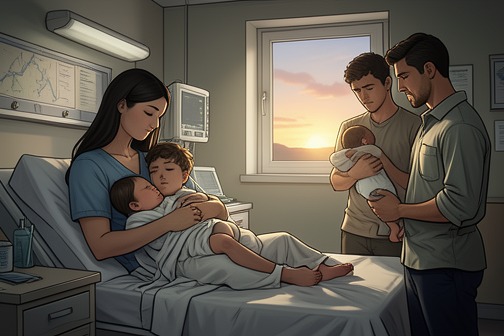
[Birth of Rachel Eliza Rutledge](entity:event-recall-event-birth-of-rachel-eliza-r-219b6035918d) is the culminating family event of the story’s second pregnancy and the clearest sign that [Ryanna Owens and Andrew Rutledge](entity:relation-recall-relation-ryanna-owens-and-and-e55a14d6473b) have moved beyond the terms of their original childbearing arrangement. Rachel’s arrival completes the couple’s immediate family with a boy and a girl, while also giving narrative weight to the promises, conflicts, and reconciliations that preceded her birth.
## Causes and Background
The birth is rooted in a sequence that began with Ryanna’s economic uncertainty and Andrew’s proposal of a three-million-dollar childbearing arrangement. After the offer from [NKL Laboratories](entity:organization-recall-organization-nkl-laboratories-bcf752ce39d1) collapsed because the company imposed a hiring freeze, Ryanna faced student loans, unemployment, and an uncertain professional future. Andrew’s proposal initially framed pregnancy as paid work, and Ryanna hesitated because she had not expected to become a mother until at least her thirties and was unsure whether she was ready for the responsibility of a baby.
The arrangement gradually became entangled with emotional and familial commitments. Ryanna later discovered that she was pregnant with Andrew’s child, and the pregnancy exposed tensions involving secrecy, public judgment, and the difference between contractual obligation and love. Andrew’s first marriage proposal emphasized the interests of [Rutledge Electronics](entity:organization-recall-organization-rutledge-electro-f50191ada9fc) and its board, so Ryanna rejected it. Their relationship changed when Andrew acknowledged that the company was not the reason he wanted to marry her and declared that he loved her, presenting her with a pear-shaped diamond ring. That second proposal transformed the expected legal or reputational solution into an avowed marriage based on mutual attachment.
Rachel’s birth also follows the couple’s difficult adjustment to their first child, AJ. Parenthood strained their marriage as Andrew worked extensively and Ryanna became absorbed in learning how to be a good mother. Their argument over his absences and her attention to an iPad made Ryanna fear that she might become a single mother in all but name. They eventually recognized the damage caused by distance, altered their routines, and rebuilt their closeness: Andrew began coming home earlier, while Ryanna set aside distractions to focus on him. When she later considered a second child, she understood that another baby might bring new growing pains, but she also believed they could endure them together.
## What Happens
Ryanna announces her second pregnancy to Andrew in an intimate moment, explaining that the pregnancy test had been confirmed by a doctor and that there were no false positives or wishful assumptions this time. The news means that AJ will have a younger brother or sister, and Andrew responds with immediate happiness and surprise. The pregnancy therefore appears not as the fulfillment of an imposed contract but as a jointly embraced continuation of the family they have built.
A little less than seven months later, Ryanna and Andrew welcome [Rachel Eliza Rutledge](entity:character-recall-character-rachel-eliza-rutled-d3a6f80b38bb) into the world. Rachel weighs eight pounds, two ounces at birth. The narrative presents her arrival through the family’s emotional response rather than through medical detail: Andrew cradles the newborn while Ryanna remains in the hospital bed, and the scene gathers the couple, their daughter, and the memory of their earlier son into one image of family continuity.
Ryanna describes the result as a perfect nuclear family because they now have a boy and a girl. Andrew treats that conclusion playfully rather than as a final limit, suggesting that Ryanna may soon begin talking about having another baby once Rachel reaches the terrible twos. His response keeps the event open-ended: Rachel completes the family as it exists at that moment, but Andrew imagines a household that could continue to grow.
## Consequences and Aftermath
Rachel’s birth confirms that Ryanna’s relationship with Andrew has undergone a decisive change. She entered the story as a young woman considering pregnancy because of financial pressure and a suspended career opportunity; by Rachel’s birth, she is Andrew’s wife, AJ’s mother, and Rachel’s mother. The child’s arrival makes the family created through the original agreement visibly durable, even though the marriage had previously been threatened by secrecy, public exposure, unequal priorities, and the pressures of first-time parenthood.
The event also gives concrete form to the couple’s repaired approach to marriage. After AJ’s birth, both partners had to learn that love required sustained attention rather than declarations alone. Andrew accepted that work could not consume his presence at home, while Ryanna recognized the need to protect time for their relationship. Their confidence about raising a second child rests on that earlier repair. Rachel is consequently not presented as a simple reward for reconciliation; her birth tests and confirms the couple’s new belief that family responsibility and marital intimacy can be managed together.
The newborn’s presence expands the parental relationships already established in the household. Andrew is shown holding Rachel shortly after her birth, while Ryanna imagines a future in which both current and future children stand beside them. The parents’ hopes are no longer limited to completing a contract or satisfying a corporate concern. They now define their future through continuing parenthood, shared domestic life, and the possibility of a large family.
## Narrative Significance
Rachel’s birth functions as the story’s closing resolution because it gathers the major lines of conflict into a single consequence. The failed NKL Laboratories job offer explains why Ryanna first considered paid pregnancy; the first pregnancy forces the couple to confront the limits of contractual thinking; Andrew’s second proposal establishes love as the basis of marriage; and the crisis after AJ’s birth requires them to redistribute time and emotional labor. Rachel arrives after those stages, allowing the ending to present family growth as a choice sustained by reconciliation rather than merely as an obligation inherited from the original agreement.
The event also completes a developmental movement from uncertainty to an integrated identity. Ryanna once feared that motherhood might erase her ambitions, yet she continued to imagine returning to graduate school and pursuing chemical engineering when the children were older. Andrew supported that aspiration, insisting that the bright, independent, career-focused woman he met should not disappear because they were having a baby. Rachel’s birth therefore does not close Ryanna’s future; it places another child within a life that is meant to contain love, marriage, parenthood, and eventual professional renewal.
The final mood is expansive rather than conclusive. Andrew says that he hopes for a house full of children and wants as large a family with Ryanna as possible. Holding Rachel, he turns the birth from an endpoint into a promise of continuation. Ryanna’s response is marked by love and optimism: with Andrew and their present and future children beside her, she sees the possibilities of the coming days, months, and years as open. Rachel’s arrival thus closes the immediate narrative while leaving the family’s life deliberately unfinished.